Ukrop's Recalls 22,880 Pounds of Baked Spaghetti and Chicken Cobbler Over Metal Slivers
A Class I USDA recall covering four products sent to three states, the Defense Department and online sales began with a consumer complaint about metal in a fully cooked meal.
By Dustin Reed Terry, Founder & Editor · Published
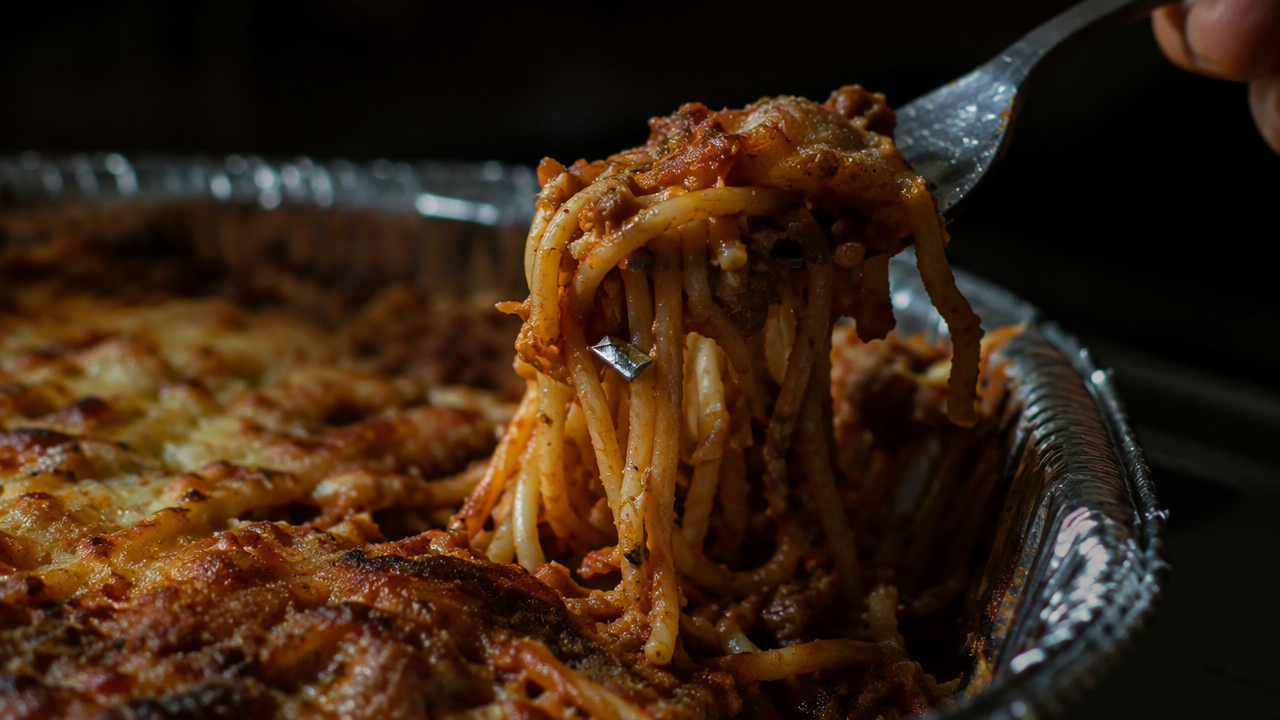
Ukrop's Homestyle Foods, a Richmond, Va., establishment, is recalling approximately 22,880 pounds of baked spaghetti and chicken cobbler products that may be contaminated with metal slivers, the U.S. Department of Agriculture's Food Safety and Inspection Service announced on July 31, 2026. The action, designated recall 012-2026 and classified Class I — the agency's most serious category, reserved for hazards where there is a reasonable probability of serious health consequences or death — covers four products produced between July 1 and July 29, 2026, and shipped to retail locations in North Carolina, Virginia and West Virginia, to the Department of Defense and through online sales, according to the FSIS notice. The agency says there have been no confirmed reports of injuries from consumption of these products.
What was recalled, and how to identify it
Four items are covered, each carrying a BEST BY date between 07/08/26 and 08/05/26 printed on the label. Consumers should read the label rather than judge by package size alone, because the spaghetti and the cobbler were packed in different formats and carry different establishment prefixes:
- 62.4-oz. aluminum pan with plastic overwrap containing "Ukrop's Baked Spaghetti - Bulk," bearing establishment number EST. 19979 in the mark of inspection.
- 14.8-oz. cardboard tray with plastic overwrap containing "Ukrop's Baked Spaghetti," bearing EST. 19979.
- 48-oz. aluminum pan with plastic overwrap containing "Ukrop's Chicken Cobbler - Bulk," bearing P-19979.
- 11.6-oz. cardboard tray with plastic overwrap containing "Ukrop's Chicken Cobbler," bearing P-19979.
That distinction matters. The spaghetti items carry the EST. prefix and the cobbler items carry the P- prefix, and the mark of inspection — usually a small circle or shield printed on the package or stamped on the pan — is where the establishment number appears. A shopper holding a tray in a store freezer cannot verify it that way, but anyone with the package at home can. FSIS notes that some of this product may still be in consumers' refrigerators or freezers. The agency's recall record lists the case as closed, a status assigned once the recalling firm has completed the steps FSIS requires to account for the product.
Why metal slivers draw a Class I classification
Foreign material is a physical hazard, and it behaves differently from the biological hazards that dominate meat recalls. A metal sliver cannot be cooked out, washed off or killed by heat. It is either in the food or it is not. Depending on its size and shape, a fragment can cut the mouth or throat, chip or fracture teeth, or, in the worst cases, cause damage further along the digestive tract. That potential for direct physical injury is why FSIS places metal contamination in Class I rather than treating it as a quality defect.
The agency's notice is specific about the hazard: the products "may be contaminated with foreign material, specifically metal slivers." It is equally specific about what is not known. As of the announcement, there were no confirmed reports of injuries tied to these products. FSIS advises anyone concerned about an injury to contact a healthcare provider. For a Class I recall of this size, that absence is meaningful — it does not mean the hazard was not real, only that no injury had been documented and confirmed when the notice was issued.
How the problem was found — and what it reveals
According to FSIS, the problem was discovered after the establishment received a consumer complaint regarding a metal piece found in a fully cooked product. That single sentence tells consumers a great deal about how physical hazards surface in the food system. Plants that produce cooked, packaged entrées commonly run product through metal detection or X-ray equipment, and those systems are effective when they are properly calibrated and when the product passes through them after the last step that could introduce metal. Detection is not absolute. Small fragments, fragments in an unfavorable orientation, and fragments introduced downstream of the detector — during filling, sealing or packaging — can all reach the consumer.
The pathway that actually stopped this product was a customer who found metal in a meal and reported it. That is the normal route for foreign-material recalls, and it is a reminder that the consumer complaint system is not a formality. FSIS operates an online Electronic Consumer Complaint Monitoring System, open 24 hours a day, for reporting problems with meat, poultry and egg products. Reports filed there feed directly into the agency's surveillance. FSIS also conducts routine recall effectiveness checks to verify that recalling firms have notified their customers and taken steps to make sure the product is no longer available. When available, the retail distribution list for this recall will be posted on the FSIS website.
The hazard trend behind recall 012-2026
MeatRecalls.com tracks foreign-material actions as a standing category in the federal recall docket, and this case fits the pattern the desk watches closely. Foreign material is one of the recurring hazard classes in FSIS's recall archive, sitting alongside Listeria monocytogenes, undeclared allergens and Salmonella. What distinguishes the foreign-material group is its signature: the hazard is almost always detected by an end user rather than by plant testing, because there is no routine laboratory test that finds a sliver of steel in a tray of baked spaghetti. The detection happens in a mouth, or in a hand.
The second recurring feature is severity. When the object is metal, FSIS classifies the recall as Class I, so a problem that may involve a few fragments in a large production run escalates immediately to the agency's highest risk tier. And the third is reach. The notice places these products in three states, but it also places them with the Department of Defense and in online sales. Online distribution means the geographic footprint printed on a recall notice can understate where the food actually went. A household in a state not listed on this notice could still be holding one of these trays.
None of that is unique to this establishment, and the record does not suggest it is. What the record does show is a familiar chain of events: a production window of nearly a month, a hazard that evaded plant controls, a consumer who noticed, and a Class I recall covering 22,880 pounds of finished food. The recurring lesson across this category is that the last line of defense is often the person at the kitchen table.
What consumers should do now
FSIS is urging consumers who have purchased these products not to consume them. The agency says the products should be thrown away or returned to the place of purchase. Because the BEST BY dates run through 08/05/26, product bought as recently as late July may still be on hand, and frozen units from earlier in the production window could still be in service. Consumers with questions about the recall can contact Susan Rowe, Ukrop's Executive Administrator, at (804) 340-3104 or [email protected]. General food-safety questions can go to the USDA Meat and Poultry Hotline at 1-888-674-6854 (888-MPHotline) or by email to [email protected].
Consumer checklist
- Check your refrigerator and freezer for "Ukrop's Baked Spaghetti" or "Ukrop's Chicken Cobbler" in 62.4-oz., 48-oz., 14.8-oz. or 11.6-oz. packages.
- Compare the label's BEST BY date against the range 07/08/26 through 08/05/26.
- Confirm the establishment number in the mark of inspection: EST. 19979 for the spaghetti items, P-19979 for the cobbler items.
- Do not taste or "check" the product for metal. Discard it or return it to the store.
- If you have already eaten the product and notice mouth, throat, dental or abdominal symptoms, contact a healthcare provider.
- Report problems with meat, poultry or egg products to FSIS at https://foodcomplaint.fsis.usda.gov/eCCF/, available 24 hours a day.
- Check the FSIS retail distribution list once it is posted, especially if you bought the product online or outside Virginia, North Carolina and West Virginia.
The watchdog takeaway
A recall of 22,880 pounds of cooked entrées for metal slivers is not a story about a single plant's bad day. It is a story about the limits of mechanical detection and the value of an ordinary customer who took the time to report what was in the food. The system worked in the sense that the product was traced, identified, classified and announced. It worked because someone spoke up. Consumers who want the complete picture — every product, size, code and date in recall 012-2026 — can find the full recall details and product list on the MeatRecalls.com recall page, and the primary source in the official USDA FSIS notice. When in doubt, the rule for this recall is simple: do not eat it, throw it away or take it back, and tell the agency what you found.