Slade Gorton Recalls Wellsley Farms Atlantic Salmon Over Listeria
Slade Gorton pulled 190 cases of 32-ounce Wellsley Farms Farm-Raised Atlantic Salmon distributed in Maryland after Listeria monocytogenes was detected; lot 3896 is affected.
By Dustin Reed Terry, Founder & Editor · Published
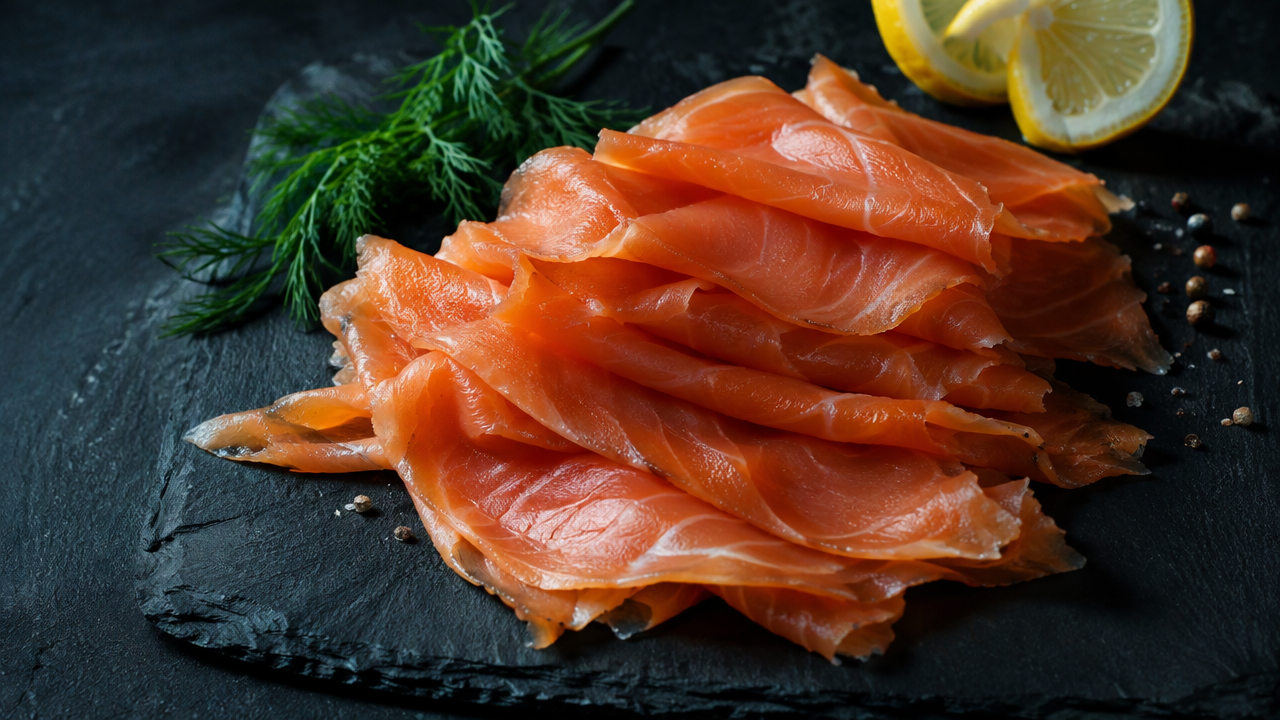
GAINESVILLE, Fla. — Slade Gorton & Co., Inc., of Waltham, Massachusetts, initiated a voluntary recall of Wellsley Farms Farm-Raised Atlantic Salmon on Feb. 10, 2026, after the product was found to be contaminated with Listeria monocytogenes, according to the U.S. Food and Drug Administration. The agency classified the action as Class II and assigned it recall number H-0541-2026. The recall is listed as active.
The affected product is a 32-ounce package — 2 pounds, or 907 grams — identified by lot 3896, a production date of June 30, 2025, and a best-by date of June 30, 2027. The UPC code on the package is 888670025963. According to the FDA record, 190 cases were distributed in Maryland. The record lists no confirmed illnesses associated with the product, and it does not state how the contamination was detected.
For a shopper, the case count is not the number that matters. The number that matters is whether a package carrying those codes is still sitting in a refrigerator or freezer.
What was recalled, and how to identify it
The recall covers one product from one company: Wellsley Farms Farm-Raised Atlantic Salmon, packed in 32-ounce (907-gram) units by Slade Gorton & Co., Inc. Three identifiers separate an affected package from a look-alike on the shelf. The first is the lot number, 3896. The second is the pair of dates stamped on the package — produced June 30, 2025, best by June 30, 2027. The third is the UPC, 888670025963.
Consumers should read all three together. A different lot number on an otherwise identical package falls outside this notice as the FDA record describes it. So does a different best-by date.
The agency record states distribution in Maryland only. That is a single-state footprint, and it is unusually narrow for a product sold in two-pound units. Shoppers outside Maryland should still check any Wellsley Farms salmon they already own, because the record describes where the firm shipped the product, not every location where a package may eventually have traveled.
One structural note is worth making for consumers who are used to scanning meat labels for an establishment number. This is an FDA-regulated seafood recall, not a USDA-inspected meat or poultry recall, so there is no USDA mark of inspection or establishment number to look for. The lot code and UPC are the identifiers that do the work here.
The record reports 190 cases. A case typically holds multiple retail units, which means the number of individual packages that could have reached shoppers is larger than 190. The FDA notice does not specify the pack size, so the exact count of retail units in circulation is not established in the record.
Why Listeria matters in a product like this
Listeria monocytogenes is a bacterium found widely in soil, water and food-processing environments. What makes it a particular concern in seafood and other refrigerated products is that it continues to multiply at refrigerator temperatures, where most foodborne bacteria slow or stop. A cold chain that protects a consumer from many pathogens does not neutralize this one.
The people at highest risk are not the general population. Pregnant people, adults 65 and older, newborns and anyone with a weakened immune system face the greatest danger from invasive listeriosis, which can cause meningitis and bloodstream infection. In pregnancy, infection can lead to miscarriage, stillbirth, premature delivery or a life-threatening infection in the newborn. Symptoms can take weeks to appear, which makes it difficult for a patient or a clinician to connect an illness back to a specific meal.
The FDA classified this recall as Class II. Under the agency's system, Class I covers products with a reasonable probability of causing serious adverse health consequences or death. Class II, the middle tier, covers products that may cause temporary or medically reversible health consequences, or where the probability of serious adverse health consequences is remote. Class III covers products unlikely to cause harm.
Class II is therefore a statement about probability across a population, not a guarantee of safety for any one person. For a healthy adult, a Class II Listeria recall may mean a few days of fever, muscle aches and gastrointestinal distress. For a pregnant person or an older adult with a compromised immune system, the same package carries a different calculation entirely — and nothing on the label tells them which one applies.
The FDA record does not describe how the product is intended to be prepared or whether it is sold ready to eat. Consumers should follow the preparation directions on the package rather than assume.
How the problem was found, and what the record leaves open
The official notice does not say whether the contamination was detected through the company's own testing, a routine regulatory sample, or in response to a consumer complaint. It does not state whether other lots produced on or around June 30, 2025, were tested, whether the firm has identified a source, or what will happen to remaining inventory. No company statement is included in the record.
That silence is normal in an initial FDA enforcement report, and it is also where the useful questions sit. When Listeria monocytogenes turns up in a finished seafood product, the finding is a signal rather than a full diagnosis: the organism may have arrived with raw material, survived on a food-contact surface, or established itself in the processing environment. Listeria is known for persisting in damp plant environments and for forming biofilms that resist routine cleaning. A single positive lot can be the visible edge of a sanitation problem, or it can be an isolated event. The public record here does not yet distinguish between the two.
The timeline is the other open question. The product was manufactured June 30, 2025, and the recall was initiated Feb. 10, 2026 — roughly seven and a half months later. The record does not explain the interval. For consumers, the practical consequence is that a package produced last summer could still be in a household today.
The shelf-life problem: a two-year best-by date
The gap between the June 2025 production date and the June 2027 best-by date is nearly two years. Long shelf life is exactly what makes a recall like this difficult to finish. Recall notices circulate for a week or two; a sealed package can sit in a chest freezer or a pantry shelf for far longer than the news cycle. Shoppers who bought in bulk, split a multipack with a relative, or set aside a package for a holiday months away have no reason to revisit the label unless someone tells them to.
The narrow distribution — Maryland only, per the record — reduces the number of households affected. It does not reduce the importance of the check for the households that are. A recall is judged by the packages that get found, not the ones that get shipped.
What consumers should do now
- Check the label against all three identifiers: Wellsley Farms Farm-Raised Atlantic Salmon, 32 oz (2 lbs) 907 g, lot 3896, best by June 30, 2027, UPC 888670025963.
- Do not eat a matching package. Return it to the store where it was purchased and ask about a refund or replacement.
- Clean the space it occupied. Remove the package, then wash and sanitize the refrigerator shelf, drawer or freezer basket it touched. Listeria can survive cold storage and spread to unwrapped food.
- Follow the package cooking directions for any seafood you keep. The FDA's general guidance for fish is an internal temperature of 145 F.
- If you are pregnant, 65 or older, or immunocompromised and you ate a matching package, watch for fever, muscle aches, headache, stiff neck, confusion or gastrointestinal symptoms, and tell a health care provider about the exposure.
- Report problems. The USDA Meat and Poultry Hotline at 1-888-674-6854 answers general food-safety questions, and illness or product complaints about FDA-regulated seafood can be filed with the FDA consumer complaint coordinator for your state.
The watchdog takeaway
This is a small recall by national standards: one company, one product, one state, 190 cases. It would be easy to file and forget. But three features make it worth remembering. First, the hazard is one that cold storage does not stop, in a category of food that many households keep on hand for months. Second, the classification is Class II — modest in the aggregate, serious for the people at the vulnerable end of the range. Third, the record is silent on illness, and silence is not the same as a clean bill of health. It means no illnesses are documented in the notice before us.
The FDA's enforcement report gives consumers the tool they actually need: a lot number, a UPC and two dates. Checking them takes less time than reading this story. That is the entire point of publishing them.
MeatRecalls.com's Consumer Watchdog desk will update this analysis if the FDA amends the classification or if the recall status changes. Consumers can review the full recall details and product list, and read the official FDA notice for the primary source record.