Shan Distribution Recalls 5,084 Pounds of Al Kabeer Swai Fish From UAE
Federal inspectors found the frozen breaded swai fillets and fish sticks came from the United Arab Emirates, a country not approved to export Siluriformes fish to the United States.
By Dustin Reed Terry, Founder & Editor · Published
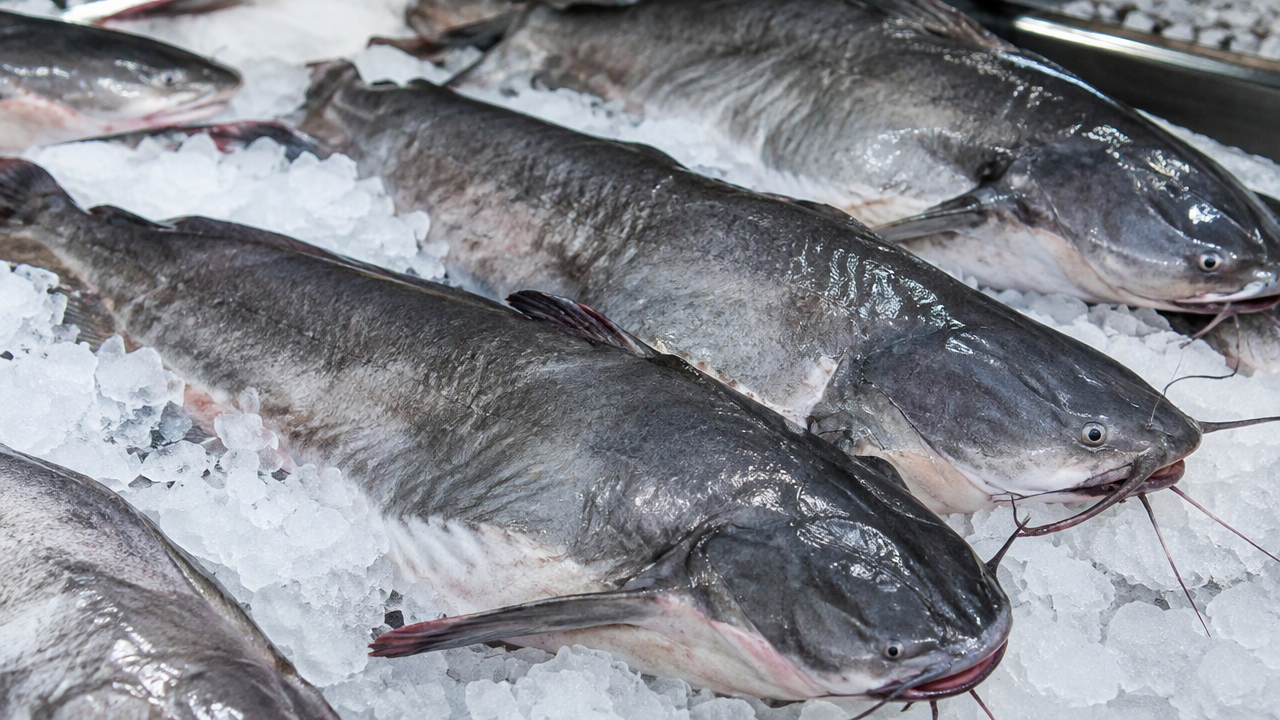
Federal food-safety officials on Aug. 7, 2026 announced the recall of approximately 5,084 pounds of frozen breaded swai fish fillet and fish stick products sold under the Al Kabeer label, after determining the fish were produced in the United Arab Emirates, a country that is not eligible to export Siluriformes fish to the United States, according to the USDA Food Safety and Inspection Service. The recalling firm is Shan Distribution Network, Inc., of Carol Stream, Ill. FSIS classified the action as Class I, its most serious designation, and the recall remains active.
The affected product was shipped to retail locations in eight states: Illinois, Indiana, Iowa, Michigan, Minnesota, Missouri, Ohio and Wisconsin. According to FSIS, there have been no confirmed reports of illness or injury linked to the products. The agency nonetheless urged consumers not to eat them, and said anyone concerned about an illness or injury should contact a healthcare provider.
What was recalled, and how to spot it in the freezer
Three retail items fall under recall number 014-2026. All are frozen, all are breaded, and all contain swai, a farmed catfish-family species:
- 13.75-oz. boxes containing Al Kabeer spicy “Zing Fish Fillets Breaded Partially Cooked Swai Fish Fillets”
- 10.58-oz. boxes containing Al Kabeer “Fish Sticks Breaded Swai Fish”
- 330-g boxes containing Al Kabeer “Breaded Fish Fillets”
The products were produced in December 2025 and carry use-before dates in June 2027, according to FSIS. Because those dates have not yet passed, an unknown share of the 5,084 pounds could still be sitting in household freezers rather than having cycled out of the food supply already.
Two labeling details carry real weight here. According to the agency, the products bear neither an establishment number nor the USDA mark of inspection. For Siluriformes fish — the order that includes catfish, swai and basa — the mark of inspection is the consumer-visible evidence that the product came from a facility operating under a system the United States has reviewed and accepted. Its absence on these boxes was one of the few things a shopper could have noticed without knowing the country of origin.
Why an import violation is classified Class I
FSIS assigns Class I when there is a reasonable probability that use of the product will cause serious, adverse health consequences or death. That language can seem out of proportion for a recall whose stated hazard is a regulatory violation rather than a confirmed pathogen, and it is worth being precise about what the record does and does not say. FSIS has not reported finding Listeria, Salmonella or any other organism in these fish, and it has not documented any illnesses.
The classification reflects what the agency cannot verify rather than something it has found. To ship Siluriformes fish to the United States, a foreign country's inspection system must first be judged equivalent to the American system — a determination that covers plant sanitation, pathogen controls, residue testing and recordkeeping. When product arrives from a country that has not received that determination, none of those assurances travel with it, and there is no establishment number to trace it back to an approved facility. The absence of a mark of inspection is not proof that a product is contaminated. It does mean the ordinary guarantees a consumer assumes are simply missing.
For context on general kitchen safety: fish should be cooked to an internal temperature of 145 F, ground beef to 160 F and poultry to 165 F. But this recall does not turn on cooking instructions. FSIS is asking consumers not to eat these products at all.
How the problem was found, and what the trail shows
The detection did not originate with an illness cluster, a consumer complaint or a laboratory result. According to the official notice, the problem was discovered during routine FSIS inspection activities — the label reviews, records checks and surveillance work the agency performs continuously across a supply chain far too large to test item by item.
That is, in one sense, the system functioning as designed. A company brought in a frozen seafood product from a country that is not cleared to send Siluriformes fish here, and the discrepancy was caught before anyone got sick. Recall effectiveness checks, in which FSIS verifies that the firm notified its customers and that product has been pulled from shelves, are now underway.
But the timeline exposes the gap. The fish were produced in December 2025 and the recall was announced on Aug. 7, 2026 — roughly eight months in which the product moved freely into retail channels across eight states. A single distributor in Carol Stream, Ill., handling a modest 5,084 pounds managed to place product across a third of the Midwest. That is how a small-volume import becomes a regional problem.
The notice adds a second layer of unfinished business. FSIS said the retail distribution list or lists will be posted on its website when available. Until they appear, consumers holding a box have no way of knowing whether the store they bought it from was among the recipients, and the agency's own guidance relies on shoppers recognizing the product themselves.
Finally, there is the structural limitation no recall notice can solve: a consumer standing in a grocery aisle has no independent way to confirm where a frozen fish fillet was processed. The label is the entire interface. When the country of origin is impermissible and the mark of inspection is missing, the safeguard depends on an inspector encountering the box before a family does.
What consumers should do now
FSIS advises consumers who purchased any of the three Al Kabeer products not to consume them. The products should be thrown away or returned to the place of purchase. FSIS has separately said it is concerned that some product may remain in refrigerators and freezers, so a deliberate sweep of the freezer is worthwhile rather than a quick glance.
Consumers with questions about the recall can contact Shaheen James, office manager at Shan Distribution Network, Inc., at 630-480-0616 or [email protected]. General food-safety questions can go to the toll-free USDA Meat and Poultry Hotline at 888-674-6854 or [email protected]. Anyone who wants to report a problem with a meat, poultry or egg product can use FSIS's online Electronic Consumer Complaint Monitoring System, open 24 hours a day, at foodcomplaint.fsis.usda.gov/eCCF. Anyone who has eaten the product and feels ill should contact a healthcare provider.
The watchdog takeaway
Three lessons stand out. The first is that the mark of inspection is load-bearing infrastructure, not decoration. It is the one line on a package that tells a shopper the product came from a plant under an accepted inspection system, and when it is absent on an imported item, that absence should register as a question rather than a formality.
The second is that routine inspection remains the primary detector for import and labeling violations, because no pathogen test and no complaint will surface a country-of-origin problem. That work is unglamorous and largely invisible until it produces a notice like this one. It also runs on a delay measured in months, which is why the recall ranks in the freezer rather than only in the warehouse.
The third is transparency. A recall notice that names states but not stores places the burden on consumers to remember a purchase from as far back as December 2025. Retail distribution lists, published promptly, would close much of that distance.
- Check your freezer for the three Al Kabeer items: 13.75-oz. spicy “Zing Fish Fillets,” 10.58-oz. “Fish Sticks,” and 330-g “Breaded Fish Fillets.”
- Confirm the package has no USDA mark of inspection and no establishment number — a red flag on any meat, poultry or catfish-family product.
- Discard the product or return it to the store; do not eat it, and do not rely on cooking to resolve an import violation.
- Wash hands and sanitize any shelf, drawer or cooler that held the boxes.
- Call a healthcare provider if anyone in the household ate the product and became ill.
- Report problems with meat, poultry or egg products through FSIS's Electronic Consumer Complaint Monitoring System.
- Call the USDA Meat and Poultry Hotline at 888-674-6854 with general food-safety questions.
Recall 014-2026 remains active, and FSIS has not reported any confirmed illnesses. Consumers can review the full recall details and product list, read the official USDA FSIS notice, and consult our guide to handling recalled meat before deciding what to do with a box already in the kitchen.