Sempio Chicken Stew Recall: 4,596 Pounds Imported Without USDA Reinspection
A routine FSIS surveillance check — not a border interception or a company disclosure — caught 4,596 pounds of Korean ginseng chicken stew that reached eight states without import reinspection.
By Dustin Reed Terry, Founder & Editor · Published
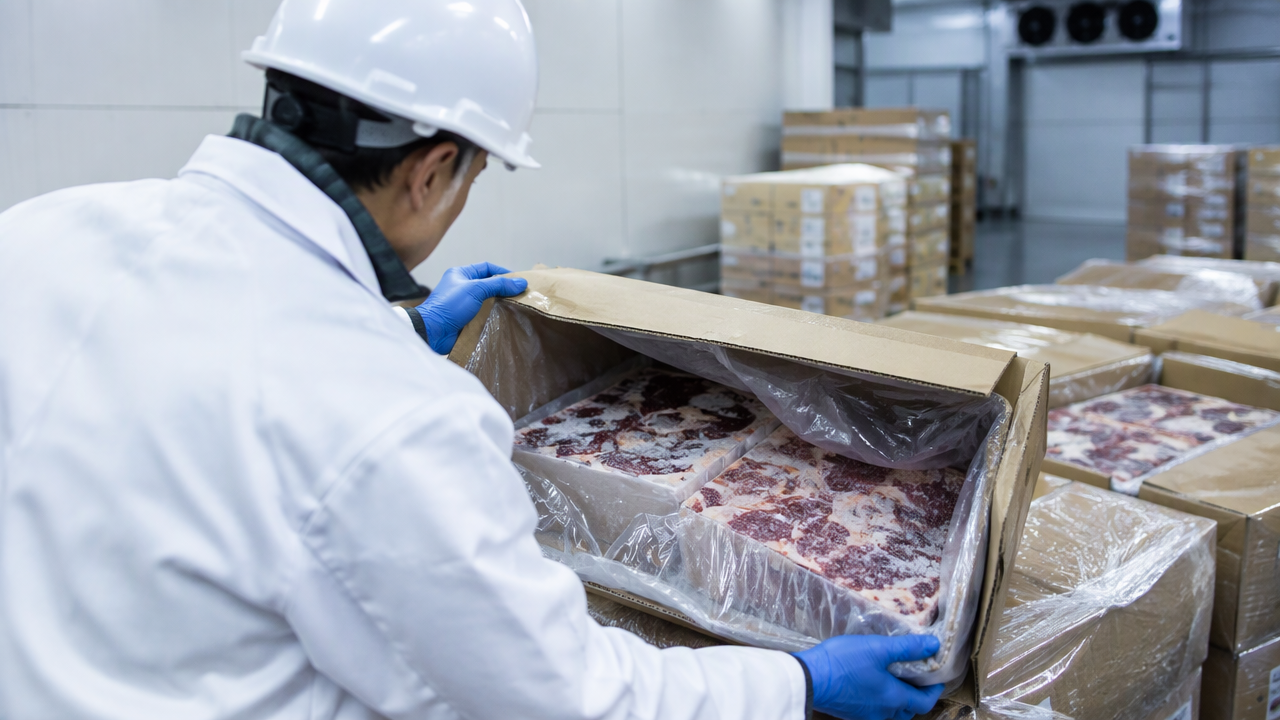
Sempio Food Services Inc., an importer based in Cerritos, Calif., is recalling approximately 4,596 pounds of ready-to-eat chicken stew products that were imported from the Republic of Korea without the benefit of import reinspection into the United States, according to a Class I notice published Sept. 25, 2026, by the U.S. Department of Agriculture's Food Safety and Inspection Service. The products are 31.75-ounce (900 g) pouches of "Sempio Korean Ginseng CHICKEN STEW CLASSIC" and "Sempio Korean Ginseng CHICKEN STEW RICH," packed in cardboard boxes and shipped to distributors and retailers in Florida, Georgia, Illinois, Maryland, New Jersey, New York, Pennsylvania and Virginia. FSIS states that the problem was discovered during routine surveillance activities and that there have been no confirmed reports of illness or injury tied to the product.
That last detail matters as much as the recall itself. This is not a story about a pathogen found in a stew. It is a story about a shipment that reached the American market without passing through the check that is supposed to stand between foreign meat and U.S. consumers — and about the fact that a routine look, rather than a gate, is what caught it.
What was recalled, and how to identify it
Recall 024-2026 covers two varieties of Sempio Korean Ginseng Chicken Stew, both in 31.75-ounce (900 g) pouches sold inside cardboard boxes. According to FSIS, the product was produced on March 30, 2026, and carries a best-by date of Sept. 29, 2027 — a shelf life of roughly eighteen months, which means pouches bought months ago may still be sitting in kitchen cabinets and pantry closets across the eight distribution states.
The recalled product bears the Korean establishment number "GIA15001" and the shipping mark "MK-2026-0422-01." Consumers should not expect those markings to look like the familiar U.S. mark of inspection, which for meat and poultry carries a USDA establishment number in the form "EST." or "P-" followed by digits. A Korean establishment number is a signal that the item was produced under a foreign inspection system, and in this case, one that did not go through FSIS import reinspection before entering commerce here.
FSIS lists the recall as Class I, the agency's most serious classification, and states plainly that some of the product may be in consumers' pantries. Retailers are urged not to sell it. Consumers who have purchased it are urged not to consume it.
Why an import violation carries a Class I label
The listed hazard here is an import violation, not a contaminant. FSIS has not reported finding a pathogen in these pouches, and the notice records no confirmed illnesses or injuries. That distinction is worth holding on to: this recall is not evidence that the stew was unsafe, and it should not be read as a report that anyone got sick.
But the import violation is not a technicality, either. Meat and poultry products imported into the United States must come from establishments in countries whose inspection systems FSIS has determined to be equivalent to the U.S. system, and shipments must be presented for reinspection at an official import establishment before they can be distributed. That reinspection step is where the agency verifies that the shipment matches its paperwork, that the foreign establishment is eligible, and that the labels and marks meet U.S. requirements. Products imported "without the benefit of import reinspection" have skipped the point at which the government could vouch for any of that.
FSIS defines Class I as a health hazard situation in which there is a reasonable probability that the use of the product will cause serious, adverse health consequences or death. The agency applied that classification to this recall. Consumers do not need to resolve the tension between a serious classification and the absence of a named hazard in order to act; the agency's instruction is unambiguous, and it is to not eat the product.
How the problem was found — and what it says about the system
The notice attributes the discovery to "routine FSIS surveillance activities." That is the entire public account of the detection. The record does not say which surveillance activity, which facility, or which shipment was inspected, and it does not say how the product entered the country or at which point in the chain it was identified.
What the record does establish is timing. The stew was produced on March 30, 2026. The recall was announced on Sept. 25, 2026 — nearly six months later. In the interval, product moved into eight states and into the hands of distributors and retailers, and, per the agency's own warning, potentially into consumers' pantries, where its best-by date of Sept. 29, 2027 means it could remain for another year.
That timeline is the most instructive part of this recall. Detection came through post-market surveillance: a routine check of product already in the stream. It worked. An agency looking for this kind of gap found it, named the establishment, named the shipping mark, and pulled the product. But surveillance is a backstop, and a backstop catches problems after distribution rather than before it. The front-end control — import reinspection at the port of entry — is designed to keep unreinspected product from reaching commerce in the first place. In this case, that control did not hold, and the system relied on its second line.
The recall also illustrates how much of the import safety architecture rests on paperwork and process rather than on laboratory testing. Establishing that a foreign establishment is eligible, that a shipping mark corresponds to a documented entry, and that a product was presented for reinspection are administrative verifications — and when one of them is missed, the failure is invisible until someone looks. The good news is that FSIS does look. The sobering news is that the look happened in the fall, for product that shipped in the spring.
What consumers should do now
Anyone who has purchased Sempio Korean Ginseng Chicken Stew Classic or Rich in a 31.75-ounce pouch should not consume it. The product should be thrown away or returned to the place of purchase. Retailers holding the product should not sell it. FSIS states that it routinely conducts recall effectiveness checks to verify that recalling firms notify their customers and that steps are taken to make certain the product is no longer available to consumers, and that retail distribution lists will be posted on the agency's website when available.
Anyone concerned about an illness or injury should contact a healthcare provider. Consumers with food safety questions can call the toll-free USDA Meat and Poultry Hotline at 888-674-6854 (888-MPHotline) or email [email protected]. Consumers who need to report a problem with a meat, poultry or egg product can use FSIS's online Electronic Consumer Complaint Monitoring System, available 24 hours a day at foodcomplaint.fsis.usda.gov/eCCF. Questions about this recall can be directed to Daniel Park, president of Sempio Food Services USA, at 562-207-9540, Ext. 101, or [email protected].
Consumer checklist
- Check your pantry. Look for 31.75-ounce (900 g) pouches labeled "Sempio Korean Ginseng CHICKEN STEW CLASSIC" or "Sempio Korean Ginseng CHICKEN STEW RICH."
- Verify the markings. Recalled product carries Korean establishment number "GIA15001" and shipping mark "MK-2026-0422-01," with a best-by date of Sept. 29, 2027.
- Do not eat it. Throw the product away or return it to the store where it was purchased.
- Do not rely on cooking as a fix. This is a process recall, not a pathogen recall, and the agency's instruction is to discard or return the product, not to cook it.
- Check the whole box, not just the pouch. The product was packed as pouches inside cardboard boxes, so a box in a cupboard may still contain recalled pouches.
- Report illness. If you believe you became ill after eating the product, contact a healthcare provider and report the problem through FSIS's Electronic Consumer Complaint Monitoring System.
- Call with questions. The USDA Meat and Poultry Hotline is 888-674-6854.
The watchdog takeaway
This recall deserves attention less for what it says about one importer than for what it reveals about the seams in the import system. A product can be manufactured in an eligible foreign establishment, labeled, boxed, sold to an importer, shipped across the Pacific, and distributed to retailers in eight states — and only then be found to have skipped the government verification step that is supposed to precede all of it. The surveillance net held. It simply held downstream.
The record also leaves open questions that consumers are entitled to have answered. FSIS has not yet posted a retail distribution list for this recall, which means shoppers in Florida, Georgia, Illinois, Maryland, New Jersey, New York, Pennsylvania and Virginia cannot yet confirm by store which locations received the product. The notice does not describe how the shipment entered without reinspection, or whether other shipments from the same Korean establishment are under review. FSIS's public recall record lists 024-2026 with a status of closed.
For families, the practical lesson is narrow and immediate: check the pantry, match the markings, and discard or return the product. For the larger system, the lesson is structural. Reinspection at the border is only as strong as the steps that route product to it, and surveillance is only as strong as the speed with which it acts. Neither is a substitute for the other, and this recall is a reminder of what happens when the first fails and the second has to catch the fall.
Consumers can review the full recall details and product list and read the official USDA FSIS notice for labels and updates.