Red's All Natural Steak Burrito Alert: Egg Undeclared, Sold at Costco
A consumer found the wrong burrito inside a Red's All Natural carton, prompting a USDA public health alert for undeclared egg in product shipped to Illinois, Michigan and Minnesota.
By Dustin Reed Terry, Founder & Editor · Published
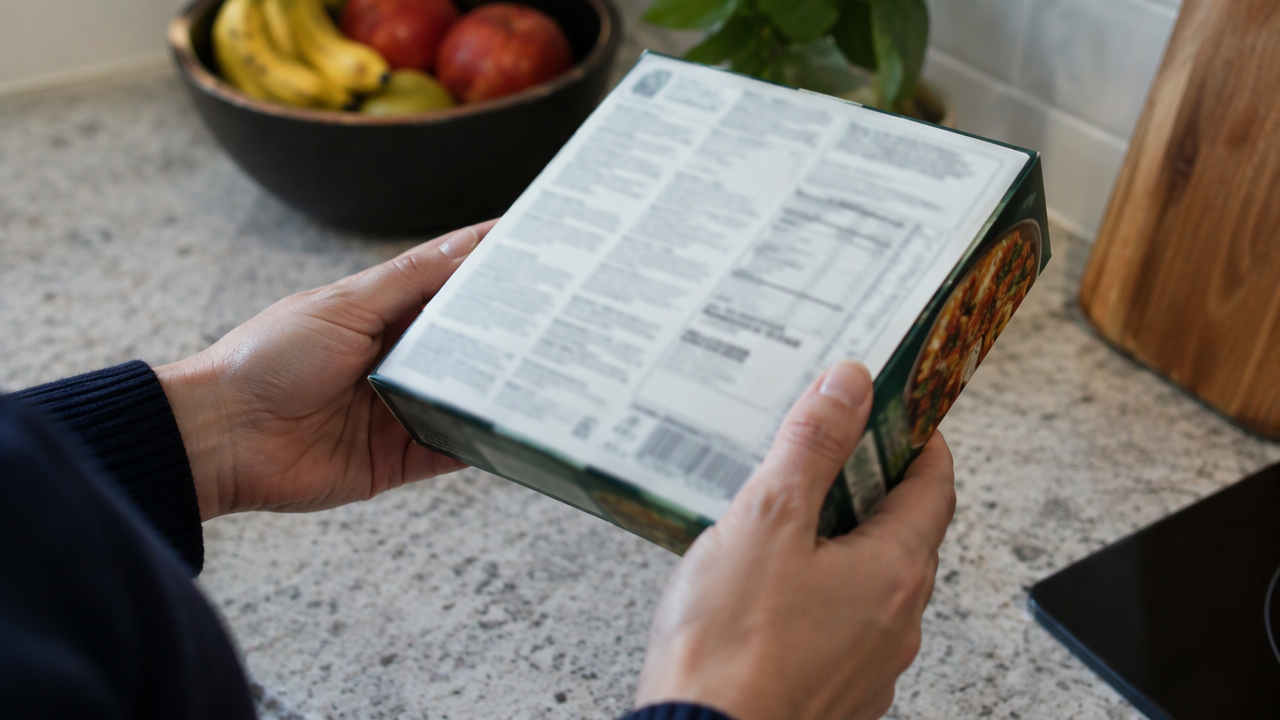
The carton looked right. The front label read steak, cilantro and lime. What was inside, according to federal food-safety officials, was a different product altogether — one that contains egg, shipped under a label that never mentions it. On July 29, 2026, the U.S. Department of Agriculture's Food Safety and Inspection Service issued a public health alert for the product, a steak, cilantro and lime burrito made by RED'S ALL NATURAL, LLC. at establishment 46069, after a consumer found the wrong item inside a sealed carton. The affected burritos were shipped to Costco distribution locations in Illinois, Michigan and Minnesota. The agency said there have been no confirmed reports of adverse reactions tied to the product.
What was flagged, and how to identify it
The alert covers 3-pound, 2-ounce cartons containing 10 individually wrapped "RED'S STEAK CILANTRO AND LIME BURRITO" units, according to FSIS. The cartons carry one of twelve production lot codes printed on the side of the package label:
- L1 SD6170 1503
- L1 SD6170 1535
- L1 SD6170 1606
- L1 SD6170 1639
- L1 SD6170 1717
- L1 SD6170 1750
- L1 SD6170 1831
- L1 SD6170 1908
- L1 SD6170 1954
- L1 SD6170 2031
- L1 SD6170 2108
- L1 SD6170 2130
The individual wrapped burritos bear the establishment number "EST. 46069" inside the USDA mark of inspection, the agency said. The product was produced on June 19, 2026. Consumers holding a carton should check the side panel for the lot code and the wrapper for the mark of inspection before deciding what to do with it. The agency's notice does not list individual retail warehouses that received the product, only the three states where it was distributed.
Why an undeclared egg is a serious problem
Egg is one of the nine major food allergens recognized under federal labeling law, alongside milk, fish, crustacean shellfish, tree nuts, peanuts, wheat, soybeans and — since the FASTER Act took effect in 2023 — sesame. Those ingredients must be declared on a food label, and for good reason: for people with an egg allergy, exposure can trigger hives, swelling, vomiting, difficulty breathing or a life-threatening reaction that requires epinephrine and emergency care. There is no way for a shopper to know the risk is present when the label is silent.
This is why allergen mistakes sit in a category of their own. FSIS classifies recalls by the relative health risk: Class I covers a reasonable probability that use of the product will cause serious adverse health consequences or death, Class II covers a remote probability of such consequences, and Class III covers situations where the product is unlikely to cause harm. Undeclared major allergens are commonly treated as Class I hazards when product may still be in consumers' hands. This particular record is a public health alert rather than a classified recall, but the underlying hazard — an allergen a family cannot see — is the same one that drives the most urgent recall notices.
It is worth noting what the notice does not say. It does not estimate how many cartons are affected, does not describe how the wrong product came to be inside a carton bearing this label, and does not identify any illness. What it does say is that the product inside was different from the product named on the package, and that the different product contains egg.
How the problem was found — and what it says about the system
According to FSIS, the problem was discovered by a consumer who identified that the product contained in a carton of "RED'S STEAK CILANTRO AND LIME BURRITO" was a different product, which contains egg, and had been incorrectly labeled. The consumer reported the issue to the producing establishment, and the establishment notified FSIS.
That chain matters. Allergen errors are frequently caught by the people who buy the food, not by the systems designed to prevent them — label verification, lot checks, package-to-product matching on the line. A shopper comparing what the box promised with what the box held was, in this case, the detection mechanism. The episode is a useful reminder that the last line of defense in food safety is often a label read carefully in a kitchen, and that consumer complaints routed to a company and then to the agency are what convert a single bad carton into a public warning. FSIS maintains an online Electronic Consumer Complaint Monitoring System that accepts reports around the clock; it is the same pipeline this consumer's report ultimately traveled.
Why this is an alert and not a recall
The notice states plainly that a recall was not requested because the affected product is no longer available for purchase. That is a technical distinction with real-world consequences. A recall is a firm's removal of product from commerce; a public health alert is the agency's way of telling consumers about a product it believes may still be in circulation when a recall is not being conducted. The product has left store shelves, but the agency is explicit that it is concerned some cartons may be sitting in consumers' freezers, where they can surface weeks or months later.
A frozen burrito is exactly the kind of item that outlives a news cycle. It gets bought in a bulk pack, split among family members, moved to a second freezer, or handed off to a neighbor. The absence of a recall does not mean the absence of risk; it means the risk has moved from the retail shelf to the home.
What consumers should do now
FSIS urges consumers who purchased this product not to consume it. The product should be thrown away or returned to the place of purchase. Anyone concerned about an illness should contact a health care provider.
- Check the freezer for 3-pound, 2-ounce cartons of RED'S STEAK CILANTRO AND LIME BURRITO holding 10 individually wrapped burritos.
- Match the lot code on the side panel against the twelve codes listed above.
- Look for EST. 46069 inside the USDA mark of inspection on the individual wrappers.
- Do not eat it, and do not give it away — throw the product away or return it to the store.
- Treat any egg-allergic household member as the priority, and contact a health care provider if a reaction is suspected.
- Ask questions of Red's All Natural by contacting Andrea Breen, Chief Supply Chain Officer, at 203-437-7713 or [email protected].
- Report problems with meat, poultry or egg products through FSIS's Electronic Consumer Complaint Monitoring System at foodcomplaint.fsis.usda.gov/eCCF/.
- Call the USDA Meat and Poultry Hotline at 1-888-674-6854 (888-MPHotline) or email [email protected] with food-safety questions.
The watchdog takeaway
Allergen labeling failures are among the most preventable hazards in the meat and poultry supply — and among the most consequential for the roughly one in ten Americans living with a food allergy. The fix is not exotic: correct package, correct label, correct product. What this alert shows is that the verification step can fail quietly, and that a mismatch may sit unnoticed in a freezer until someone happens to open the box.
It also shows the value of a consumer who bothered to report a problem. A single carton that held the wrong meal set off a chain — consumer to establishment to agency to public notice — that ended with families in three states being told, in writing, not to eat what they had bought. That is the system working after the fact. Consumers can do their part by reading the side panel as carefully as the front, and by treating any doubt about a bulk-packaged meal as a reason to throw it out rather than gamble with it.
For the complete lot code list and product images, see the full recall details and product list. The official USDA FSIS notice contains the agency's complete alert, including label photographs and distribution information.