Produce Innovations Recalled Roast Beef Subs Mislabeled as Turkey in Four States
A Class III FDA action covered 112 closed-face subs sent to medical facilities and vending distributors in Illinois, Iowa, Kansas and Missouri under the wrong label.
By Dustin Reed Terry, Founder & Editor · Published
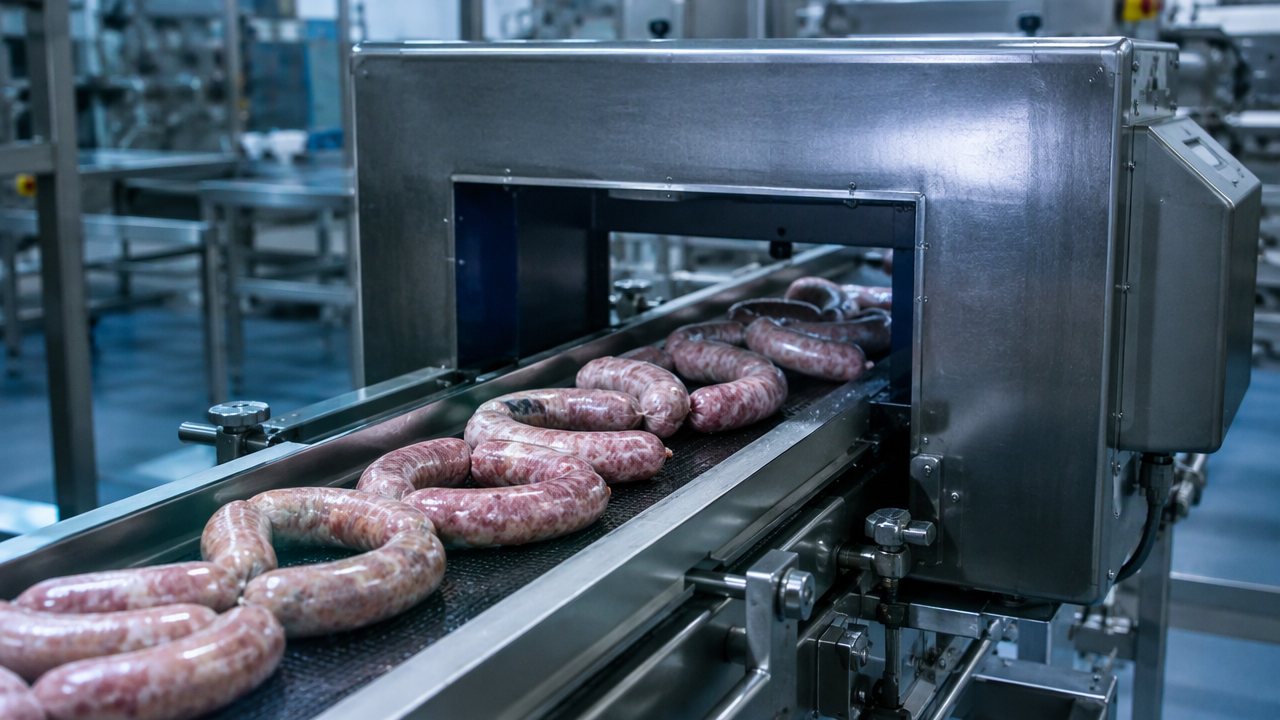
Produce Innovations, a Norwalk, Iowa, producer of packaged convenience foods, initiated a voluntary recall on May 27, 2026, of 112 individual roast beef closed-face sub sandwiches that left the plant labeled as turkey and cheddar subs, according to the U.S. Food and Drug Administration's enforcement record. The FDA classified the action as Class III, assigned it recall number H-1111-2026, and the file is now closed. The affected units, 6.1-ounce sandwiches wrapped in clear plastic with a green adhesive label, were distributed to medical facilities and vending distributors in Illinois, Iowa, Kansas and Missouri.
The gap here is not between safe food and unsafe food. It is between what the wrapper says and what the wrapper holds, and that gap is one of the most persistent entries on the federal recall file.
What was recalled, and how to identify it
According to the FDA record, the product is a roast beef closed-face sub sandwich packed in clear plastic wrap under a green adhesive label. That label reads, in part, "Lunch Box Kitchen" and "Premium Convenience," followed by "Turkey & Cheddar Sub," a best-by date of 06/14/26, lot number 26 134, a net weight of 6.1 ounces, and the instruction "KEEP REFRIGERATED." The producer line on the label identifies Produce Innovations, 1845 Colonial Parkway, Norwalk, IA 50211.
The identifying marks consumers should check are the lot code — listed in the record as 26134 — and the best-by date of 06/14/26. Anyone holding a green-labeled "Lunch Box Kitchen" Turkey & Cheddar Sub in that lot should treat it as the product described in this recall rather than the product the label promises.
One detail in the record deserves attention: the agency's product description calls the item a roast beef and cheddar sandwich, while the reason statement describes a roast beef and Swiss sub labeled as a turkey and cheddar sub. Either way, the package named turkey and did not contain turkey. The cheese variety is the one point the paperwork does not settle cleanly, and it is worth noting because it is the kind of small inconsistency that makes a consumer's own verification harder than it should be.
Why a label mix-up is still a food-safety recall
The hazard field on this record reads simply "Other," and the risk level is listed as "Marginal." That is the language of a Class III action, the FDA's lowest severity tier, used when the use of the product is not likely to cause adverse health consequences. The record reports no illnesses or adverse events, and this desk does not speculate about unreported harm.
Low severity, however, is not the same as no consequence. A ready-to-eat sandwich is a food where the label is often the entire basis for a person's decision. Some consumers avoid beef for religious or cultural reasons. Some avoid it on medical advice. Some live with alpha-gal syndrome, the tick-associated allergy to galactose-alpha-1,3-galactose, a sugar found in mammalian meat, for whom a beef sandwich mistakenly eaten as turkey is a genuine health event and not a labeling nuisance. A person with a beef allergy, though uncommon, faces the same problem.
The distribution list sharpens the point. The record places these sandwiches at medical facilities as well as vending distributors. In a hospital or clinic setting, staff and patients frequently choose a packaged item by reading the label, and dietary restrictions are often managed at exactly that level of trust. A wrong label defeats the only check available at the point of sale.
How the problem surfaced, and what the record leaves out
The FDA record describes the action as firm initiated, meaning Produce Innovations brought the recall forward voluntarily rather than at the agency's direction. The record does not state how the mismatch was detected — whether a line worker noticed the wrong wrap, a label audit caught the error, or a customer reported it. That absence is normal in these filings and worth stating plainly rather than filling in.
What the record does show is that the error was confined to a defined lot and a defined quantity: 112 units, one lot code, one best-by date. Lot-level coding is the unglamorous infrastructure that makes a targeted recall possible instead of a blanket one. When a producer can say precisely which run is affected, the public gets a specific warning rather than a vague one.
The system that should have caught this is label verification at the packing stage — a person or a scanner confirming that the wrap in hand matches the product inside it. It is a simple check, and it is precisely the kind of check that fails when two similar products with similar green labels run on the same line in the same shift.
The trend this record belongs to
In the federal recall records this desk reviews, labeling and packaging failures recur more steadily than the pathogen recalls that dominate headlines. They are the quiet majority of the enforcement file: the wrong product in the right package, the right product in the wrong package, an ingredient missing from the list. They rarely generate urgency, and they almost never produce the illnesses that drive coverage, but they erode the one thing a packaged food can offer a stranger in a vending aisle or a hospital cafeteria — a label that is true.
Two features of this particular record illustrate a wider problem for anyone trying to track that trend honestly. The first is the hazard field, filled here with the word "Other." A category that generic tells a consumer nothing and tells a researcher less; a standardized hazard vocabulary in federal recall data would make patterns visible that currently have to be reconstructed by hand. The second is the classification. "Class III" and "Marginal" are accurate terms of art, but they read to a layperson as reassurance, when what they actually mean is that the agency judged the risk of harm low, not that the error was trivial.
Put together, the record describes a small, contained, correctly handled event: a voluntary recall, a narrow lot, a closed file, no reported harm. That is the system working. It is also the system working on a problem it sees constantly and has not eliminated.
What consumers should do now
Anyone who received one of these sandwiches through a medical facility, a cafeteria, or a vending distributor should check the label before eating. If it is a green-labeled "Lunch Box Kitchen" Turkey & Cheddar Sub bearing lot code 26134 or a best-by date of 06/14/26, do not rely on the label to describe the contents. Discard it, or return it to the place of purchase. People who avoid beef for religious, cultural or medical reasons should be especially direct about this: the package in question is not turkey.
Keep refrigerated ready-to-eat sandwiches at 40 degrees Fahrenheit or below, and follow the package's own storage instructions regardless of the labeling question. Consumers with questions about a food-safety issue can reach the USDA Meat and Poultry Hotline at 1-888-674-6854. Adverse events or product problems can be reported to the FDA through MedWatch.
- Check for a green adhesive label reading "Lunch Box Kitchen" Premium Convenience "Turkey & Cheddar Sub."
- Look for lot code 26134 and best-by date 06/14/26.
- Confirm the net weight, listed as 6.1 ounces.
- Do not eat the sandwich if you avoid beef for religious, cultural or medical reasons.
- Discard or return the product to the point of purchase.
- Keep any ready-to-eat sandwich refrigerated at 40 F or below.
- Report problems to the FDA through MedWatch, or call the USDA hotline at 1-888-674-6854.
The watchdog takeaway
A 112-unit recall over a swapped sandwich will not change anyone's summer. That is the point worth making. The overwhelming majority of the recalls this desk covers are not outbreaks; they are small failures of attention caught before anyone was hurt, and their value is that they show where the checking failed while the cost is still zero. A label that names turkey over roast beef is a low-stakes error today and the same error that puts an undeclared allergen in a box tomorrow. The fix is the same both times: verify the wrap against the product, every run, every shift. The file on Produce Innovations is closed. The category is not.
MeatRecalls.com maintains the full record for this action, including the complete product description, lot code, distribution states and classification, on our full recall details and product list. The primary source is the official FDA notice in the agency's enforcement report system.