Park St. Deli Macaroni & Cheese Recall Puts Allergen Detection Gaps in Focus
BEF Foods recalled 58,405 cases of Park St. Deli Macaroni & Cheese nationwide over undeclared soy lecithin, but the FDA file leaves the detection story unexplained.
By Dustin Reed Terry, Founder & Editor · Published
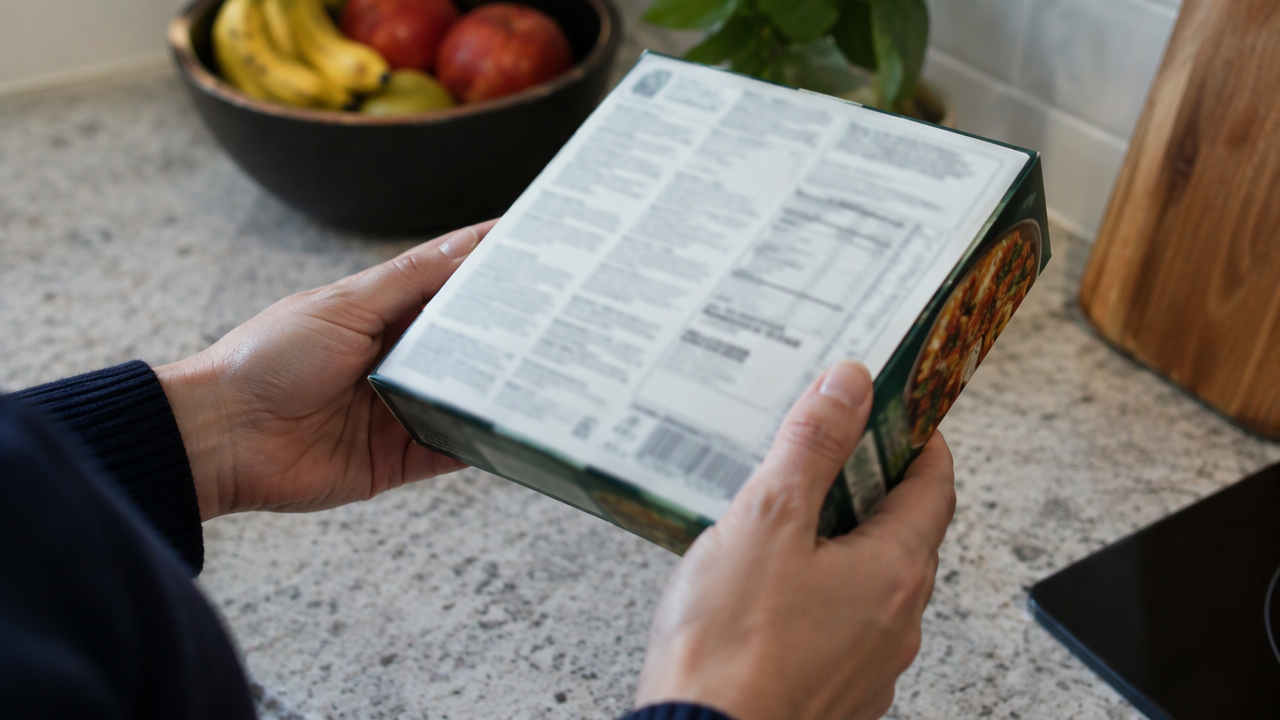
BEF Foods, Inc. of Sulphur Springs, Texas, initiated a voluntary recall of Park St. Deli Macaroni & Cheese on March 23, 2026, after soy lecithin was present in the product without being declared on the label, according to the U.S. Food and Drug Administration. The recall covers 58,405 cases, each holding nine 20-ounce packages, and the product was distributed nationwide. The FDA classified the action as Class II and assigned it recall number H-0940-2026; the case file now shows a status of closed. For the households most affected — the families who read every label because a soy allergy lives in the house — the size of the recall matters less than whether the tub in their refrigerator carries one of 31 production codes.
What was recalled, and how to identify it
The recalled item is Park St. Deli Macaroni & Cheese, net weight 20 ounces (1 pound 4 ounces, 567 grams). Each package is a plastic tub placed inside a paperboard sleeve — the kind of packaging that puts the printed label on the outer card and the food in the inner container, a detail worth noting for anyone who keeps the tub and throws the sleeve away. Cases shipped nine packages each, and the total volume was 58,405 cases.
The FDA record lists 31 product codes: SUL4839705; SUL4839706; SUL4853771; SUL4853772; SUL4854698; SUL4854700; SUL4854701; SUL4855698; SUL4855699; SUL4855700; SUL4857735; SUL4857736; SUL4857737; SUL4857784; SUL4857785; SUL4866750; SUL4866751; SUL4866752; SUL4866781; SUL4866782; SUL4866783; SUL4866784; SUL4872813; SUL4872814; SUL4872815; SUL4873787; SUL4873788; SUL4886739; SUL4886740; SUL4887698; SUL4887699.
Consumers should compare the code printed on the package itself — not the retailer's shelf tag and not a photograph of the label on a store app — against that list. Because distribution was nationwide, this is not a regional recall confined to one state or one grocery chain; shoppers anywhere in the country could encounter the product.
Why undeclared soy lecithin is a real hazard
Soy is one of the major food allergens recognized under U.S. labeling law, which is why it must appear in the ingredient statement when it is present. Soy lecithin is a soy-derived emulsifier used widely in processed foods, and clinicians differ on the risk it poses to any given patient — which is precisely the argument for declaring it. The decision about whether a soy-allergic person can safely eat a given product belongs to that person and their allergist, not to a shopper forced to guess from an incomplete label. Reactions to undeclared allergens range from hives and gastrointestinal distress to anaphylaxis, a medical emergency.
FDA's Class II designation means that exposure to the product may cause temporary or medically reversible health consequences, or that the probability of serious adverse health consequences is remote. It is a statement about relative risk, not a finding that nothing can go wrong for an allergic individual. The official record does not report any confirmed illnesses or adverse reactions linked to this recall, and nothing here should be read as evidence that someone was harmed.
How the problem was found — and what the record does not say
The most striking thing about the public file is what it omits: it does not state how the undeclared soy lecithin came to light. An undeclared-allergen recall can originate in several ways. A consumer with a reaction may report it to the company or to the FDA. A firm may catch the mismatch during its own label review or a formulation change. A supplier may notify a manufacturer that an ingredient specification changed. A federal or state inspector may collect a sample under a routine assignment. A retailer's quality audit may surface it. Any of those pathways could produce a recall structured exactly like this one; the record does not identify which one did.
That gap is structural rather than accidental. For a Class II undeclared-allergen action, the FDA's public entry typically supplies the product identity, the codes, the distribution footprint and the quantity, and stops there. It does not explain whether the formulation changed, whether a supplier substituted an ingredient, whether the outer sleeve was correct while the inner tub was not, or whether one production lot triggered a wider review. The consumer can confirm that a recall exists and cannot learn what caused it — which makes it impossible to judge whether the underlying failure has been fixed or merely papered over.
The volume tells its own story about how far a labeling failure travels. At 58,405 cases of nine packages each, this recall involved more than half a million individual tubs of macaroni and cheese moving through distribution before it was caught. Allergen recalls are among the most common categories in the food system precisely because they depend on a chain of documentation — supplier specification sheets, formulation records, label proofs and physical line changeovers — in which a single mismatch at any link produces a nationwide event.
Who caught it matters just as much. Detection through a firm's internal quality check or a supplier notification is fast. Detection through a consumer complaint means someone ate first. A system that learns about allergen labeling failures primarily from the people who react to them is a system that is treating allergic consumers as its sensor network.
What consumers should do now
Anyone with a soy allergy, or cooking for someone who has one, should check any Park St. Deli Macaroni & Cheese in the refrigerator against the code list above. If the code matches, do not eat the product, do not serve it, and do not donate it. Contact the retailer where it was purchased about returning it, and discard it in a way that keeps it out of reach of anyone who might retrieve it. If the product has already been eaten and no symptoms have appeared, there is generally no action to take beyond watching for a reaction; if symptoms such as hives, swelling, wheezing or vomiting do appear, seek medical care immediately and treat it as a potential allergic emergency.
Adverse reactions and labeling problems can be reported to the FDA through its consumer complaint process, which is how many allergen recalls begin in the first place. Reports from shoppers are not paperwork; they are one of the few detection mechanisms the system actually has.
- Check the package code against the 31-code list, not the shelf tag.
- Check the label for soy on any Park St. Deli Macaroni & Cheese you already own, and treat a missing soy declaration as a reason not to eat it.
- Do not rely on the outer sleeve alone — verify the code on the container you actually have.
- Return or discard matching product; do not donate recalled food.
- Report reactions and labeling problems to the FDA and tell the retailer, so the record has a detection trail.
- Read labels every time — reformulations and supplier changes happen without any change to the front of the package.
The watchdog takeaway
A recall notice is a floor, not a ceiling, on what the public deserves to know. This file tells a family whether their macaroni and cheese is affected, which is the essential function and worth crediting. It does not tell them why soy lecithin went undeclared, whether the problem was a formulation change, a supplier substitution or a labeling error, or what the company has changed since. The case is marked closed, which means the FDA judged the firm's corrective action adequate and ended its tracking — it does not mean the product vanished from every pantry, and it does not mean the cause was publicly explained.
Consumers who want more than a code list can ask for it. Ask the retailer whether the product was pulled from shelves and when. Ask the manufacturer, in writing, for the full code range and the reason for the recall. Report anything that looks wrong. And keep the practical rule in view: for an allergic household, the label is the safety system, and any recall like this one is evidence that the system failed somewhere upstream of the kitchen.
For the complete code list, package details and recall status, see our full recall details and product list, the official FDA notice, and our guide to handling recalled meat.