Kayem Foods Recalls 1.58 Million Pounds of Ready-to-Eat Meat and Poultry
A single complaint about warm product at delivery led Kayem Foods into a Class I recall of nearly 1.6 million pounds of ready-to-eat meat and poultry held in a warehouse cooler that drifted out of temperature.
By Dustin Reed Terry, Founder & Editor · Published
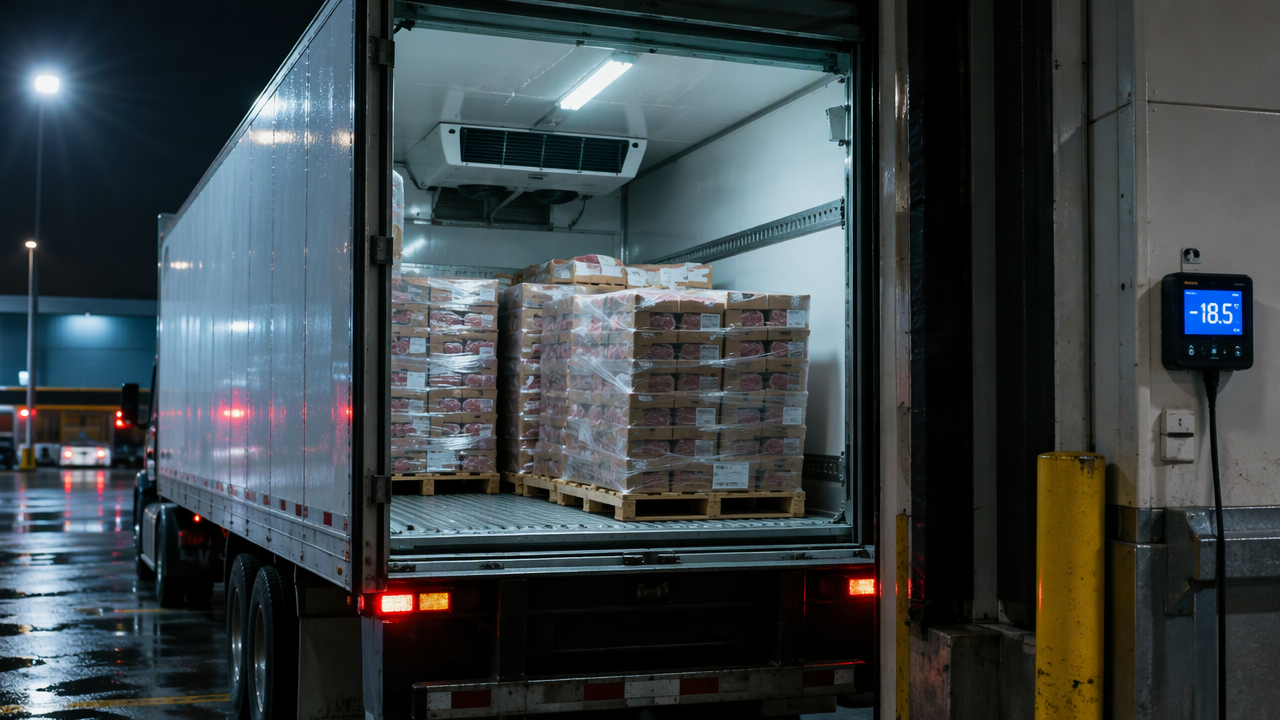
Kayem Foods Inc., a Chelsea, Mass., establishment, is recalling approximately 1,584,361 pounds of ready-to-eat meat and poultry products because they may have experienced temperature abuse during storage, according to a notice the USDA Food Safety and Inspection Service published on Oct. 17, 2026. The recall, numbered 026-2026, carries a Class I designation, the agency's most serious classification, and covers product produced from roughly March 31, 2026, through Oct. 7, 2026. The items were shipped to retail and foodservice locations nationwide and to Hong Kong. FSIS said there have been no confirmed reports of illness linked to the products.
What was recalled and how to identify it
The recall covers various weights of ready-to-eat meat and poultry products bearing one of three establishment numbers inside the USDA mark of inspection: EST. M/P 7839, EST. P 20935A and EST. M 9520. FSIS has published a full product list, including UPC code numbers for items distributed from the Chelsea, Mass., location, in a PDF accompanying the notice. Because the product list is long and includes items sold under multiple labels, consumers should compare packages directly against that document rather than relying on a brand name alone.
The mark of inspection is the small circular or shield-shaped seal printed on meat and poultry packaging. The establishment number appears inside it, usually as a small line of text. On a packaged ham, sausage, hot dog or deli item, that number is the single most reliable way to match a product in the refrigerator against a federal recall, because the same company may operate several establishments and a recall may involve only some of them. In this case, the agency lists three establishment numbers under one firm, which means shoppers should check for all three rather than assuming a single prefix settles the question.
FSIS said retail distribution lists will be posted on its website when available, which allows consumers to check whether a specific store received the recalled product. Those lists typically appear after the initial announcement and are updated as the agency gathers information from retailers.
Why temperature abuse is a serious hazard in ready-to-eat food
Ready-to-eat is a regulatory term with a practical meaning: the product is expected to be eaten as purchased, without a cooking step that would kill bacteria. That is why a storage failure matters far more for these items than for raw products a consumer will later cook to a safe internal temperature. The hazard is not necessarily that new contamination entered the food. It is that organisms already present had an opportunity to multiply.
Listeria monocytogenes is the organism public health agencies watch most closely in this setting, because it is unusual among foodborne pathogens in its ability to grow at refrigeration temperatures. Holding ready-to-eat product above the safe range gives it, and other organisms, a growth window. FSIS's own guidance and the broader federal food code treat 40 F as the upper limit for cold holding, which is why cooler temperature logs are treated as a critical control point in warehouses and distribution centers rather than a housekeeping detail.
The agency's record classifies the event under processing defects while the notice itself describes temperature abuse during storage. That distinction matters to how the recall reads but not to the consumer's risk calculation: the product was produced under inspection and then exposed to conditions that may have undermined the safety margin built into it. The Class I designation reflects the agency's judgment that the product presents a reasonable probability of serious adverse health consequences or death if consumed. No illnesses have been confirmed, and the record does not describe any. Anyone concerned about illness after eating these products should contact a healthcare provider.
Pregnant people, older adults, young children and people with weakened immune systems face elevated risk from listeriosis specifically. For those households, a recall of this kind deserves prompt attention rather than a wait-and-see approach.
How the problem surfaced, and what it says about the system
According to FSIS, the problem was discovered after the firm received a retail customer complaint about warm product temperatures at the point of delivery on Oct. 1, 2026. The establishment then investigated and determined that it had stored various ready-to-eat meat and poultry products in a warehouse cooler that experienced temperature deviations. The public announcement followed on Oct. 17.
Several details in that sequence are worth pausing on. The trigger was not a finished-product test, an inspection finding or an illness cluster. It was a customer noticing that product felt warm on arrival. That complaint became the entry point for a review that ultimately swept nearly seven months of production into a recall, from late March to early October. A storage failure in a single cooler can reach backward across everything held in it and forward through every retailer and foodservice account that received the affected lots.
The record also does not state when the cooler deviations began, how far out of range temperatures drifted, or how long they lasted. Those gaps are common in initial recall notices and are often filled in later by the firm or the agency. What the record does establish is the scale of the consequence: more than 1.5 million pounds, two distribution channels, and an export market.
The recall also illustrates the role of recall effectiveness checks. FSIS states that it routinely conducts these checks to verify that a recalling firm has notified its customers and that steps are taken to make sure product is no longer available to consumers. That process is the difference between a press release and an actual removal of food from shelves and walk-in coolers.
What consumers should do now
FSIS is concerned that some of the product may be in consumers' refrigerators. Consumers who have purchased these products are urged not to consume them. The products should be thrown away or returned to the place of purchase. Because the production window runs back to March 31, 2026, it is worth checking the freezer and the back of the deli drawer, not just recent purchases. Freezing does not undo temperature abuse that occurred before the product was frozen.
Consumers with questions can contact Kayem Foods customer service Monday through Friday, 7:30 a.m. to 4:00 p.m. EDT, at 800-426-6100 or [email protected]. Food safety questions can go to the USDA Meat and Poultry Hotline at 888-674-6854 or [email protected]. Problems with a meat, poultry or egg product can be reported through FSIS's Electronic Consumer Complaint Monitoring System, which is available 24 hours a day.
The watchdog takeaway: the cold chain is a shared responsibility
Recalls like this one are a reminder that the inspection seal on a package certifies how a product was made, not how it was handled afterward. Between the plant and the plate sit warehouse coolers, refrigerated trailers, loading docks, retail back rooms and deli cases. Each is a place where a product that left the establishment in good condition can lose its safety margin. The most useful consumer habit to build from this recall is a boring one: read the establishment number, keep cold food cold, and treat an unusually warm delivery as information worth reporting to the store.
For the full list of affected products, see our full recall details and product list and the official USDA FSIS notice. If you are holding product that matches the recall, our guide to handling recalled meat walks through safe disposal, returns and what to tell your household.
Consumer checklist
- Check the seal. Look inside the USDA mark of inspection for EST. M/P 7839, EST. P 20935A or EST. M 9520.
- Check the dates. The recall covers product produced from approximately March 31, 2026, to Oct. 7, 2026.
- Compare against the list. Match package names and UPC codes to the FSIS product list rather than brand alone.
- Do not taste it. Discard the product or return it to the store; do not rely on smell or appearance.
- Clean up. Wash hands, surfaces and shelves that held the product, and wash reusable containers.
- Report symptoms. If you feel ill after eating a recalled item, contact a healthcare provider and tell them what you ate.
- Keep cold food cold. Hold refrigerated ready-to-eat products at 40 F or below and check the thermometer, not the dial guess.