Inexport Logistics Recalls YUPI Pork Crackling Chips From Colombia
A Class I recall of 189 pounds of YUPI mixed chips with chicharrón made in Colombia, a country barred from exporting meat to the U.S., reached shelves in eight states.
By Dustin Reed Terry, Founder & Editor · Published
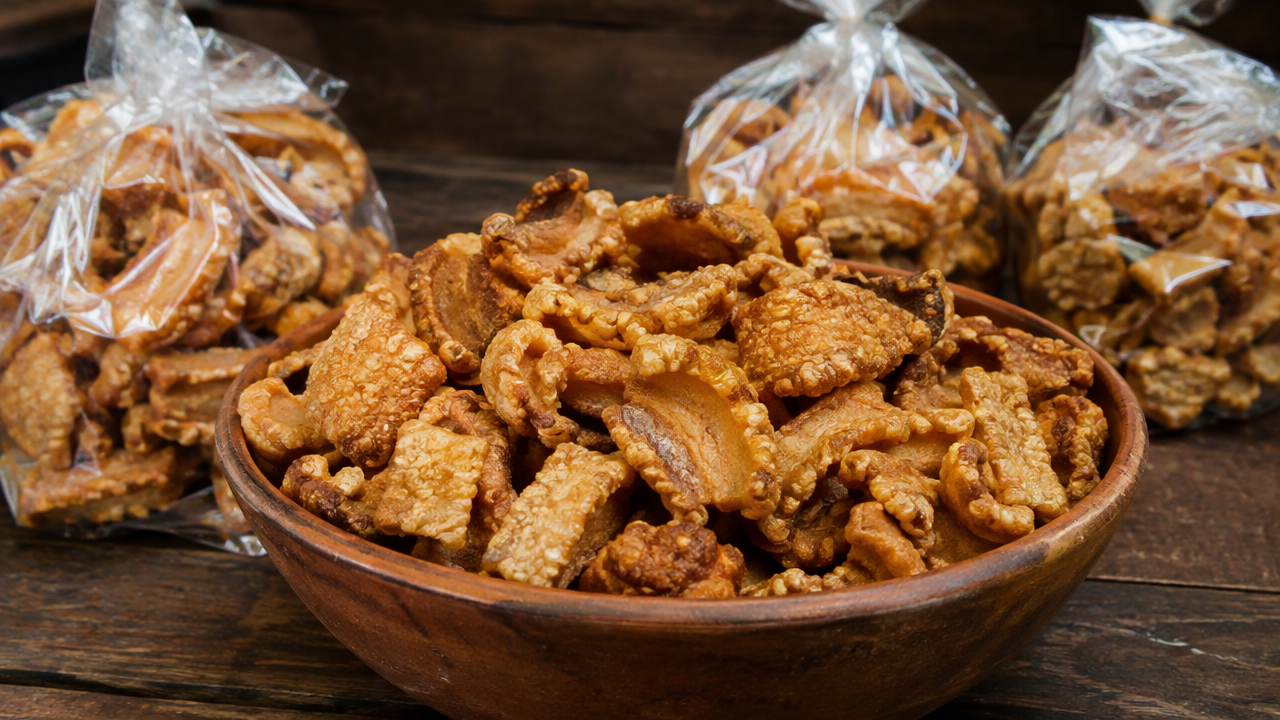
A Miami importer is recalling about 189 pounds of barbecue-seasoned mixed snack chips that contain pork cracklings produced in Colombia, a country the USDA does not permit to export meat products to the United States — a Class I recall that reached retail shelves, and possibly home pantries, in eight states.
Inexport Logistics LLC, of Miami, Fla., is recalling 60-gram foil bags of “YUPI GOLPE CON TODO SABOR BBQ” mixed chips sold with “Clásicas,” “PLATANOS” and “Chicharrón Fred.,” according to the USDA Food Safety and Inspection Service. The recall, number 025-2026, was announced Oct. 2, 2026, classified as Class I and listed as active. FSIS said there have been no confirmed reports of illness or injury from the products.
The bags were shipped to distributors and retail locations in Arizona, California, Colorado, Florida, Illinois, Kentucky, Minnesota and Texas, the agency said. FSIS said it is concerned that some of the product may be sitting in consumers’ pantries.
What was recalled, and how to identify it
The recall covers one item: 60-gram foil bags of the YUPI GOLPE CON TODO SABOR BBQ mixed-chips assortment that includes Clásicas, PLATANOS and Chicharrón Fred. FSIS said the products are subject to recall “regardless of the product date,” which means there is no lot code or use-by date shoppers can use to separate a recalled bag from a bag that is not covered. The label and the package size are the identifiers.
According to FSIS, the recalled bags “do not bear any import marks on the labels.” For shoppers accustomed to looking for the USDA mark of inspection, there was nothing on the package to check — no shield, no establishment number, no country-of-origin panel flagged by the agency as a signal. The bag looks like any other snack on the shelf.
FSIS said a retail distribution list will be posted on its website when it becomes available, which is the document that will show which specific stores received the product. Until then, the agency’s notice names eight states and notes that the product went to distributors as well as retailers, meaning it is not necessarily confined to a single chain.
Why an import violation is treated as a Class I hazard
This is not a pathogen recall. FSIS did not announce that it found Listeria, Salmonella or any other contaminant in the chips, and the agency has not tied any illness to them. The hazard named in the record is an import violation.
Under FSIS classification rules, a Class I recall means there is a reasonable probability that use of the product will cause serious, adverse health consequences or death. That is the agency’s highest tier, and it is applied here because of what the chicharrón is and where it came from.
Countries that want to ship meat, poultry or egg products to the United States must have inspection systems that FSIS has reviewed and determined to be equivalent to the American system. Colombia is not eligible to export meat products to this country, according to the notice. That means the pork component in these bags was not produced under a system the U.S. has verified, and the product did not carry the mark of inspection that tells a buyer the meat inside came from an inspected, approved source.
For consumers, the practical point is narrower than the classification may sound. Nobody has reported getting sick. But the assurance that normally travels with an inspected meat product — that the plant, the process and the animal source met a known standard — is absent, and the agency treats that absence as a high-risk gap rather than a paperwork problem.
How the problem was found, and what it says about the system
The recall did not begin with a border interception or a company-initiated report. According to FSIS, the problem was discovered during a recall effectiveness check, when the ineligible product was observed at a retail location.
Recall effectiveness checks are routine follow-up work. FSIS conducts them to verify that a recalling firm has notified its customers and that steps have been taken to make certain product is no longer available to consumers. In this case, the check put an inspector in front of an imported bag that should not have been in the country at all.
That sequence is the most instructive part of the record. The notice does not say how the product entered commerce or how long it had been on sale. What it documents is that ineligible imported meat reached distributors and retailers across eight states and was still on a shelf when an inspector looked. The detection came from a routine verification step, not from a label review at the point of entry.
The poundage is small — 189 pounds. The geography is not. Eight states, plus a distributor layer that makes a precise store list harder to assemble, is a reminder that a modest volume of ineligible product can spread widely before anyone notices. Small recalls are not automatically small problems; they are often the ones where product lingers in cupboards and corner-store displays long after the news cycle ends.
What consumers should do now
FSIS is urging people who bought the recalled chips not to eat them. The product should be thrown away or returned to the place of purchase. Anyone concerned about illness or injury after eating it should contact a healthcare provider.
Consumers and media with questions about the recall can contact Mauricio Caro, sales manager for Inexport Logistics LLC, at (786) 670-4750 or [email protected]. General food-safety questions can go to the USDA Meat and Poultry Hotline at 1-888-674-6854 or [email protected], and problems with a meat, poultry or egg product can be reported around the clock through the FSIS Electronic Consumer Complaint Monitoring System at https://foodcomplaint.fsis.usda.gov/eCCF/.
- Check the pantry and the car. Look for 60-gram foil bags labeled YUPI GOLPE CON TODO SABOR BBQ, the mixed assortment listing Clásicas, PLATANOS and Chicharrón Fred.
- Do not rely on a date code. The recall applies regardless of the product date, so a package that looks fresh is still covered.
- Do not eat it, and do not hand it out. Discard the product or take it back to the store.
- Think about where it came from. The product went to distributors as well as retailers in eight states, so it may turn up in small groceries and corner stores, not only large chains.
- Already ate some? If you are concerned about illness or injury, contact a healthcare provider.
- Call the firm with product questions: Mauricio Caro, Inexport Logistics LLC, (786) 670-4750, [email protected].
- Call the hotline with safety questions: USDA Meat and Poultry Hotline, 1-888-674-6854, [email protected].
- Report a problem through the FSIS Electronic Consumer Complaint Monitoring System at https://foodcomplaint.fsis.usda.gov/eCCF/, and watch fsis.usda.gov/recalls for the retail distribution list.
The watchdog takeaway
For domestic meat and poultry, the mark of inspection with its establishment number is the consumer’s shorthand: a federal inspector has been in that plant. Imported product depends on a parallel promise — that the exporting country’s system has been reviewed and found equivalent. When a country is not eligible at all, that promise never existed, and nothing on the package substitutes for it.
What this record shows is how quiet that failure can be. An ineligible pork ingredient arrived inside a snack bag with no import marks, moved through distributors into eight states, and surfaced because an inspector happened to be in a store doing a follow-up check on a recall. That is a working safety net, but it is a late one. Consumers cannot audit an import file from the chip aisle. They can look for the mark of inspection, read where a product was made, and take a recall notice seriously even when the poundage sounds trivial — because the families most at risk are the ones who never hear the announcement and find the bag in the back of a cupboard months later.
For the product list, the states involved and the recall classification, see full recall details and product list. The agency’s announcement, including contact information and any updates, is available in the official USDA FSIS notice.