H & N Group Recalls Cooked Frozen Shrimp Over Cesium-137 Risk
The Vernon, California, firm pulled 3,780 one-pound bags of cooked, peeled shrimp sold around Houston and the Gulf Coast after federal officials cited insanitary production conditions.
By Dustin Reed Terry, Founder & Editor · Published
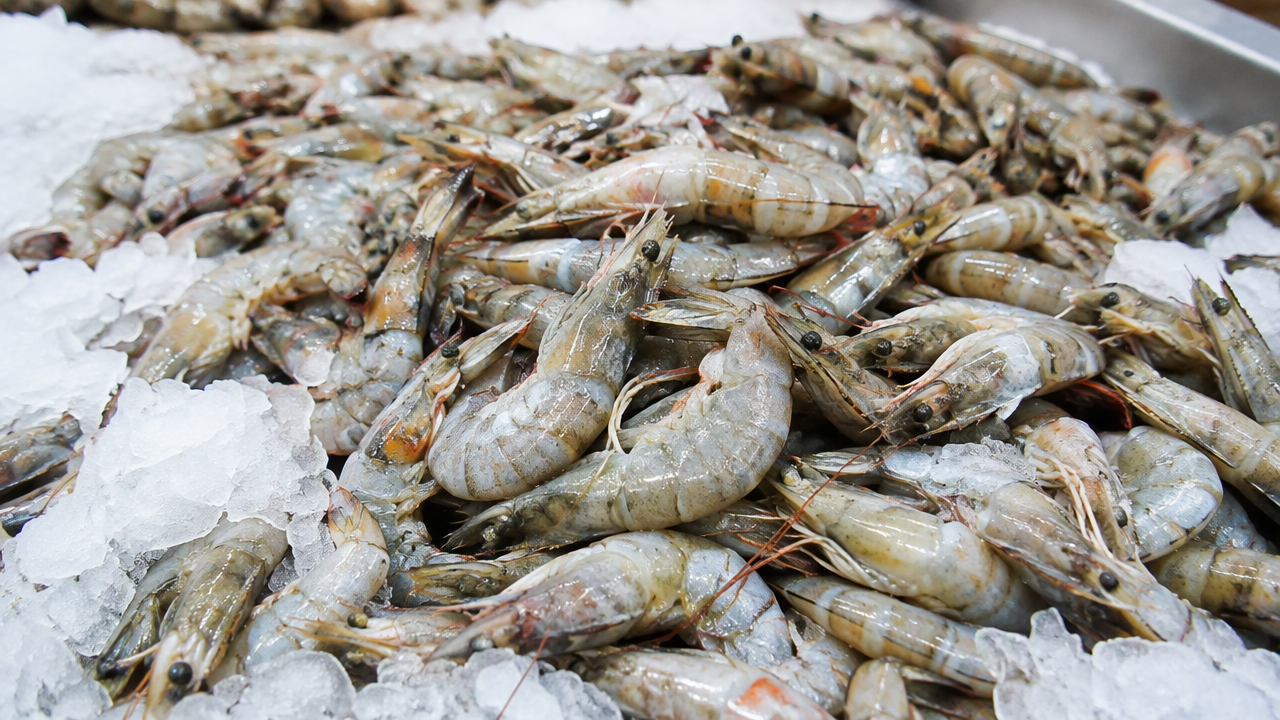
H & N Group Inc. of Vernon, California, has recalled 378 cases — 3,780 one-pound retail bags — of frozen cooked medium shrimp, peeled and deveined, tail off, after the U.S. Food and Drug Administration classified the action as a Class II recall tied to insanitary manufacturing conditions under which the product may have been contaminated with Cesium-137 (Cs-137), according to the agency's enforcement record. The voluntary recall, number H-0516-2026, was initiated on February 9, 2026, and the FDA record lists its status as closed.
The shrimp was distributed to a single retail consignee with roughly 30 locations in the greater Houston and Gulf Coast areas, according to the official notice. That single line of distribution is the most important practical fact in the record: a concentrated recall area, a small number of lot codes, and a product that many households in southeast Texas may still have in the freezer.
What was recalled, and how to identify it
The recalled product is Frozen Cooked Medium Shrimp Peeled & Deveined, described in the notice as Tail Off-White Shrimp, packed in a 1-pound retail plastic bag and carrying UPC 041220333035. Two production lots are involved: Lot EA14 25118, bearing a Best By date of October 28, 2026, and Lot EA14 25119, bearing a Best By date of October 29, 2026.
Consumers should read the small print on the back or bottom of the bag rather than the front panel. Because the product is cooked and frozen, it is often eaten cold — thawed for shrimp cocktail, tossed into a salad, or added to a pasta dish at the last minute. That matters here, for reasons explained below. Shoppers outside the Houston and Gulf Coast area are less likely to encounter this product, but the consignee operates multiple stores, and frozen shrimp travels home in coolers and moves between households. Any bag matching both the UPC and one of the two lot codes is part of the recall.
The hazard: why a radioactive isotope appears in a seafood recall
Cesium-137 is a radioactive form of the element cesium. It is a fission product, generated in nuclear reactors and nuclear detonations, and it emits gamma radiation with a half-life of about 30 years. Those are precisely the properties that make it a food-safety problem rather than a labeling one: it does not die off in a freezer, it is not destroyed by heat, and it cannot be rinsed from a shrimp the way a surface contaminant might be washed from produce.
The reflex that serves consumers well in most meat and poultry recalls — cook it to 165 F and the bacteria are gone — is a microbiological rule, written for Salmonella and Listeria. It has no application to a radiological contaminant. The FDA maintains derived intervention levels for radionuclides in food, the screening thresholds the agency uses to judge whether contaminated food would pose a threat to public health, and those thresholds are applied to the product as sold, not to the product after cooking.
It is worth noting how the record categorizes this hazard: the hazard field reads only Other. The words Cesium-137 appear in the stated reason for the recall, and they are effectively the only detail the public record offers about what the agency was concerned about.
How the problem was found, and what the record does not say
The recall is attributed to insanitary conditions rather than to a documented positive test result in the product. Under the Federal Food, Drug, and Cosmetic Act, food is adulterated if it has been prepared, packed or held under insanitary conditions in which it may have become contaminated with filth or rendered injurious to health. The operative phrase is may have become. Federal law does not require the agency to prove that a specific bag is contaminated; it requires a documented set of conditions under which contamination was possible. That is the theory on which this recall rests.
What the notice does not disclose is equally important for anyone trying to assess risk. It does not describe the specific insanitary conditions found, does not identify the retail consignee by name, and does not state whether product samples tested positive for Cs-137. The record also does not report any confirmed illnesses or injuries. Consumers should read that absence carefully: it is an absence of reported illness, not evidence that the product was verified clean.
The system did work at the lot level. A firm was able to name two lot codes, two Best By dates, a UPC, a case count and a distribution footprint down to a single consignee — the kind of precision that makes a recall actionable instead of merely alarming. The gap is in what shoppers are told about the hazard itself. A recall posting that says Other and insanitary conditions asks consumers to take an extraordinary warning on faith.
What Class II means in this case
The FDA assigned this recall a Class II designation, which the agency defines as a situation in which use of or exposure to the product may cause temporary or medically reversible adverse health consequences, or in which the probability of serious adverse health consequences is remote. It is the middle of three tiers: Class I covers a reasonable probability of serious adverse health consequences or death, and Class III covers products unlikely to cause any adverse health consequence at all. Class II is not a synonym for harmless. It is a statement about probability and severity, and it reflects the agency's judgment that the risk here does not rise to the Class I threshold.
What consumers should do now
Check the freezer before the next shrimp dinner. A bag matching the UPC and either lot code should go back to the retailer for a refund; if returning it is not practical, seal it inside a closed container before discarding so that it is not eaten by anyone else, including pets. Do not attempt to salvage the product by recooking it, rinsing it, or refreezing it — none of those steps addresses a radiological contaminant.
Anyone who has already eaten the shrimp and has health concerns should contact a health care provider and mention the recall, including the lot code if it is still legible. Because the record reports no confirmed illnesses, there is no basis for broad alarm, but a conversation with a clinician is the right channel for individual questions. Questions about the recall itself belong with the FDA, which has jurisdiction over seafood; the USDA Meat and Poultry Hotline at 1-888-674-6854 handles meat, poultry and processed egg questions and is not the contact point for this product.
The status Closed on the FDA record means the agency considers the recall action complete. It does not mean every bag has been located. Shoppers who bought frozen shrimp in the Houston or Gulf Coast area in recent weeks should check their freezers rather than assume the window has passed.
The watchdog takeaway
This recall is small — 3,780 units, one consignee, two lots — and it will pass almost unnoticed. It deserves more attention than its size suggests, for three reasons. First, radiological contamination is rare enough in the American food supply that each occurrence is a test of how well the public is informed, and a posting labeled Other with no explanation of the contaminant fails that test. Second, the recall shows the difference between a hazard that a kill step can fix and one it cannot: cooked, ready-to-eat shrimp is a product designed to be eaten without further cooking, which removes the last line of defense consumers normally rely on. Third, it is a reminder that insanitary conditions is a legal term covering a wide range of failures, and that consumers cannot tell from the phrase alone whether the concern is filth, an allergen, a pathogen or, as here, an isotope.
The practical response is unchanged. Read lot codes, keep receipts, return recalled food, and treat every Class II notice as a real instruction rather than a formality. Families relying on frozen shrimp as an affordable protein should be able to find out in plain language what the government found and why it matters.
- Check the bag: Frozen Cooked Medium Shrimp Peeled & Deveined, Tail Off-White Shrimp, 1-pound plastic bag, UPC 041220333035.
- Confirm the lot: EA14 25118 with a Best By date of October 28, 2026, or EA14 25119 with a Best By date of October 29, 2026.
- Do not cook, rinse or refreeze the product in an attempt to make it safe.
- Return it to the retailer for a refund, or seal it in a closed container before discarding.
- If you have eaten it and are concerned, contact a health care provider and mention the recall.
- Report problems or ask questions through the FDA's consumer complaint process.
For lot codes, distribution details and the agency's classification of this action, see our full recall details and product list and the official FDA notice. For step-by-step handling advice on recalled meat, poultry and seafood, including what to keep and what to throw away, consult our guide to handling recalled meat.