GoodTimes Beef Jerky Alert: Street's Beef Teriyaki Sold in Oklahoma Has Undeclared Wheat
Federal inspectors say wheat is missing from the label of 2.5-ounce Street's Beef teriyaki jerky bags made by GoodTimes Beef Jerky and sent to three Oklahoma stores.
By Dustin Reed Terry, Founder & Editor · Published
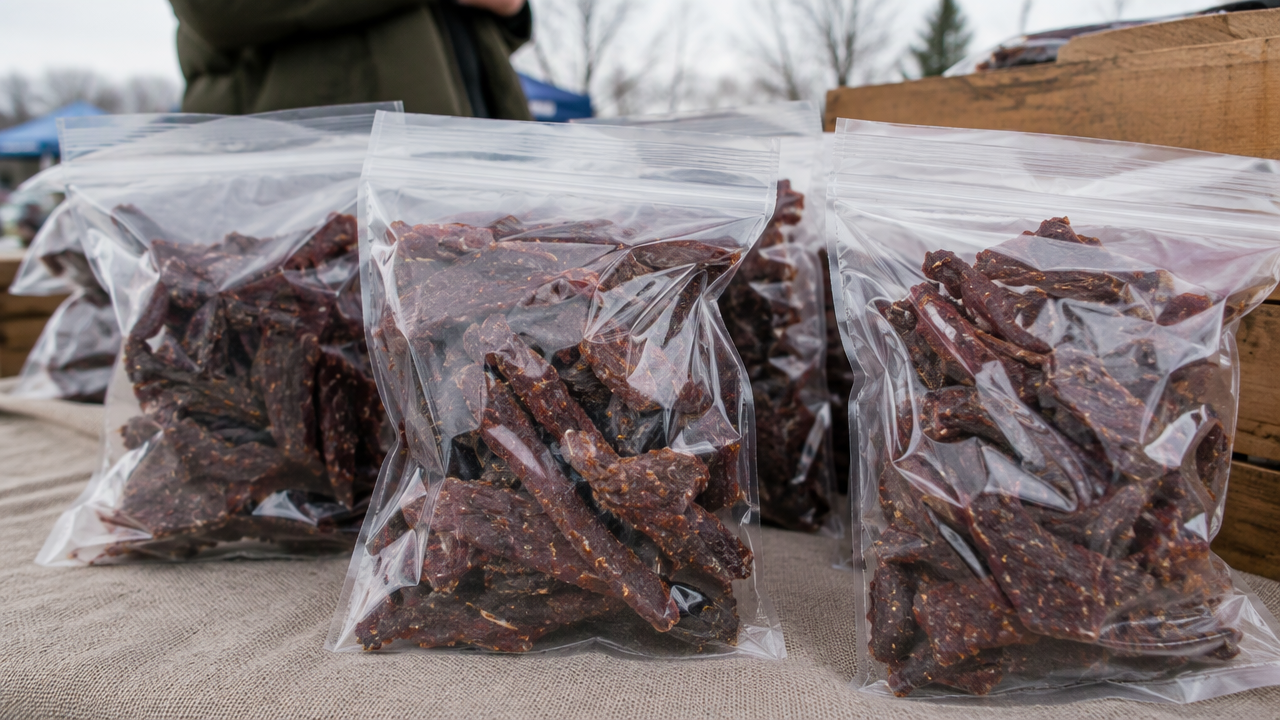
The U.S. Department of Agriculture's Food Safety and Inspection Service on July 3, 2026 issued a public health alert for 2.5-ounce plastic bag packages of “STREET'S BEEF Jerky TERIYAKI FLAVOR” because the jerky contains wheat, a known allergen, that is not declared on the product label. The alert, identified as PHA-07032026-01, covers ready-to-eat beef jerky produced by GoodTimes Beef Jerky at establishment 21827 on various dates between Aug. 7, 2025, and July 1, 2026, and shipped to three retail locations in Oklahoma. According to FSIS, a recall was not requested because the product is no longer available for purchase. The agency nonetheless said it is concerned that some of the jerky may be in consumers' pantries, and it urged anyone who bought it not to eat it.
What was flagged, and how to identify a package
The alert applies to one product only: 2.5-ounce plastic bag packages of “STREET'S BEEF Jerky TERIYAKI FLAVOR.” The product is ready to eat, meaning it is not cooked by the consumer before consumption, so any labeling failure reaches the household exactly as packaged.
Two identifiers matter most, according to the FSIS notice. The first is the lot code, which appears on a sticker applied to the packaging rather than printed into the bag itself — a detail worth noting, because a shopper who scans only the front of the package can miss it. The affected lot codes are:
- 0701271
- 0520271
- 04014271
- 0415271
- 0211271
- 1015261
- 1016261
- 1029261
- 0909261
- 0806261
- 0820261
The second identifier is the establishment number, “EST. 21827,” which appears inside the USDA mark of inspection on the package. FSIS said the product was shipped to three retail locations in Oklahoma: Bordwine Hay, Feed & Hardware, Grassroots Farm Store, and Bromide Trading Co. Consumers who shop at farm stores, feed and hardware retailers, or small country markets should look closely, since this distribution did not run through large supermarket chains.
Why an undeclared allergen is treated as a public health matter
Wheat is one of the major food allergens that federal labeling law requires manufacturers to declare on packaging. For the estimated millions of Americans who manage a wheat allergy, the label is not marketing copy — it is the only reliable tool for deciding whether a food is safe. Allergic reactions to wheat can range from hives, itching and swelling to gastrointestinal distress and, in severe cases, anaphylaxis, a life-threatening emergency.
The alert does not report any confirmed illnesses. According to FSIS, there have been no confirmed reports of adverse reactions due to consumption of this product. The agency said anyone concerned about a reaction should contact a health care provider. Because reactions can occur from small amounts and because jerky is a snack that is often eaten without a second thought — on a hike, in a car, at a desk — the practical risk sits with households that bought a bag believing the label told the whole story.
How the problem was found
FSIS said the problem was discovered during a routine label review. That is the unglamorous core of the inspection system: agency staff comparing what a product contains against what its packaging claims, and catching gaps before a consumer does.
The notice attributes the action to two problems, misbranding and an undeclared allergen. The package carries a brand name, Street's Beef, that differs from the establishment FSIS identifies as the producer, GoodTimes Beef Jerky. The agency did not elaborate beyond that in its notice, and the record does not state how the two names relate. What the record does show is that the lot code was applied by sticker, and that the labeling shortfall spanned production dates from August 2025 into July 2026 — nearly eleven months of output at one establishment. That range is a reminder that a single labeling mistake is rarely a single day's mistake.
What consumers should do now
FSIS urged consumers who purchased the product not to consume it. The jerky should be thrown away or returned to the place of purchase. Households that shop at any of the three named Oklahoma retailers, or that received a bag from someone who did, should check the refrigerator, the freezer, the pantry, and the loose-bag zones that jerky tends to occupy — glove compartments, desk drawers, backpacks, tackle boxes and emergency kits.
Anyone with questions about the alert can contact Allyson Moore, owner and operator of GoodTimes Beef Jerky, at 405-550-7657 or [email protected]. Consumers with general food safety questions can call the toll-free USDA Meat and Poultry Hotline at 888-674-6854 or email [email protected]. Problems with a meat, poultry or egg product can be reported 24 hours a day through FSIS's online Electronic Consumer Complaint Monitoring System.
The Consumer Watchdog checklist
- Match the product: 2.5-ounce plastic bags labeled “STREET'S BEEF Jerky TERIYAKI FLAVOR.”
- Read the sticker, not just the bag: lot code 0701271, 0520271, 04014271, 0415271, 0211271, 1015261, 1016261, 1029261, 0909261, 0806261 or 0820261.
- Confirm the establishment number: “EST. 21827” inside the USDA mark of inspection.
- Search beyond the fridge: freezers, pantries, vehicles, bags, toolboxes and emergency kits.
- Do not eat it: throw the product away or return it to the store where it was bought.
- Already eaten it and worried? Contact a health care provider, as FSIS advises.
- Report problems: use the FSIS Electronic Consumer Complaint Monitoring System at foodcomplaint.fsis.usda.gov.
The watchdog takeaway: an alert is not a non-event
Public health alerts occupy a quieter corner of the food safety system than recalls, and it is easy for consumers to read one as a lesser action. The distinction is procedural, not chemical: a recall is generally a firm's removal of product from commerce, while an alert is FSIS's own warning to the public, often issued when a recall is not being pursued. The notice carries no Class I, II or III designation; those classifications are assigned to recalls. None of that makes undeclared wheat less of a hazard to a person with a wheat allergy.
The phrase to linger on is “no longer available for purchase.” It describes the retail shelf, not the household. Product that was sold before the issue surfaced is, by definition, already in someone's kitchen. FSIS said as much when it noted concern that some product may be in consumers' pantries. The label review that surfaced this problem is the kind of routine check that consumers never see when it works — and today it worked, but only after nearly a year of production had shipped. Checking the label against the recall page is still the fastest defense a family has.
Consumers can review the full recall details and product list and compare their packages against the official USDA FSIS notice before deciding what stays in the kitchen.