Fontanini pork sausage recall: check freezers for EST. 6944 cases
Fontanini Foods is recalling 2,320 pounds of raw, frozen pork sausage links packed June 23, 2026, after two complaints of clear, hard plastic; here is what to look for.
By Dustin Reed Terry, Founder & Editor · Published
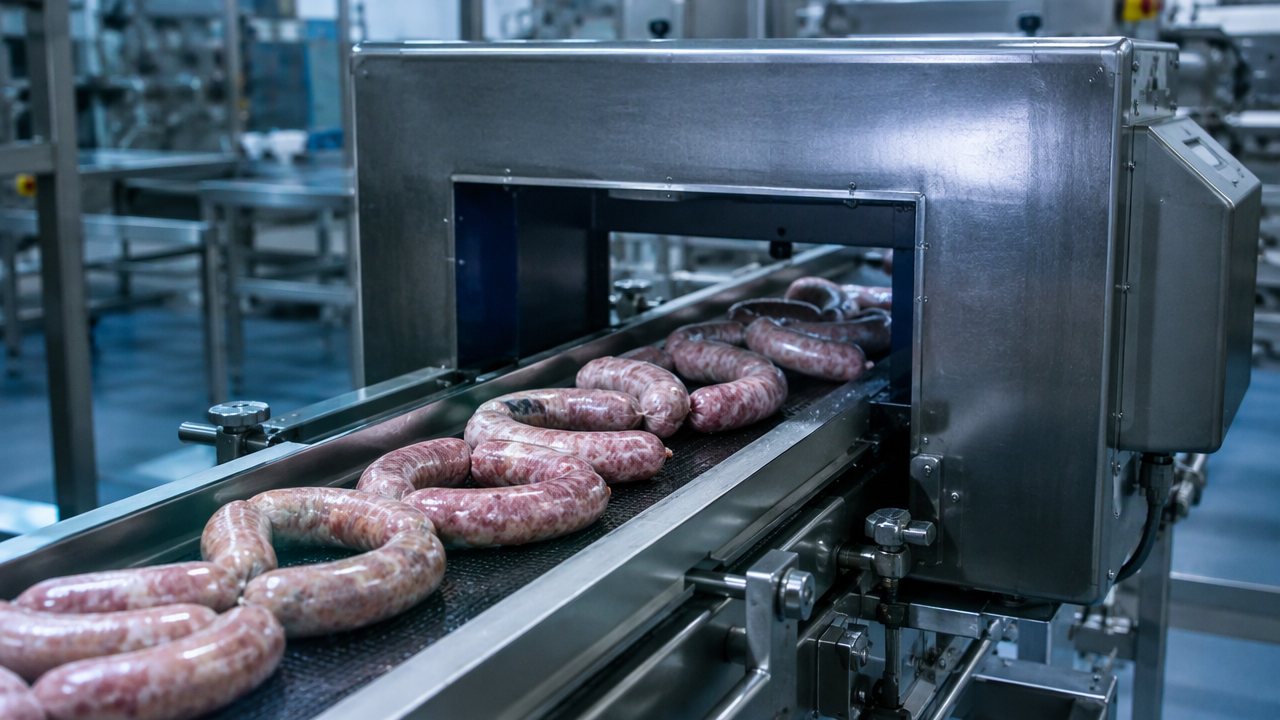
Fontanini Foods LLC, a McCook, Ill., establishment, is recalling approximately 2,320 pounds of raw, frozen pork breakfast sausage that may be contaminated with clear, hard plastic, the USDA Food Safety and Inspection Service announced Sept. 25, 2026, in recall 023-2026. FSIS classified the recall as Class I, the agency's most serious category. The affected sausage was produced on June 23, 2026, and shipped to distributors in California, Florida, Michigan and Nevada to be served in food service establishments, including restaurants, according to the official notice. FSIS said there have been no confirmed reports of injury or adverse reactions linked to the product.
The practical question for households is narrower than the headline suggests, and it is worth answering precisely. The recalled product is a 10-pound food service case, not a retail package, so the most likely place to find one is a restaurant, institutional or distributor freezer, or the freezer of a household that buys in bulk from a food service supplier. Because the sausage is raw and frozen, a case bought months ago could still be sitting in a freezer today, which is why the check is worth doing now rather than after the next round of spring cleaning.
What was recalled, and how to read the box
According to the FSIS notice, the recall covers 10-lb. cardboard box cases containing “Fontanini PORK SAUSAGE LINKS,” with “ITEM 393” printed on the box and “PACKED ON 06/23/2026” printed on the shipping label. The boxes bear establishment number “EST. 6944” inside the USDA mark of inspection.
Those four details are the ones that matter in a cold, poorly lit freezer. Read the box before you read anything else: the item number, the pack date on the shipping label, and the establishment number inside the round USDA mark. A Fontanini product alone is not enough to act on. A Fontanini pork sausage link case that does not carry ITEM 393 and the June 23, 2026 pack date is not part of this recall as described in the notice.
The notice describes distribution to distributors in four states — California, Florida, Michigan and Nevada — for food service use. FSIS said that if any specific retail locations are identified, a distribution list will be posted on its website. As of the notice, the agency had not published one.
Why clear, hard plastic is a Class I problem
FSIS applies Class I to a health hazard situation in which there is a reasonable probability that use of the product will cause serious, adverse health consequences or death. Foreign material recalls often land in that category, and the reason is straightforward: a hard fragment does not cook out, wash off or soften. Heat that makes pork sausage safe to eat does nothing to a piece of rigid plastic. USDA guidance to cook ground pork to 160 °F addresses bacteria, not physical hazards, and no kitchen thermometer reading resolves this one.
Clear plastic is a particularly difficult contaminant in a raw pork product. Sausage links are dense, irregular and often handled in quantity, and a small colorless shard can sit against the meat without registering visually. The hazard is mechanical rather than microbiological: a fragment can damage teeth or dental work, injure the mouth or throat, or cause internal injury if swallowed. The notice makes no claim about how much plastic may be present or how large the pieces are, and it does not describe how the material entered the product.
How the problem was found, and what it says about the system
The recall began with two customer complaints. According to FSIS, the problem was discovered after the firm received two reports of clear, hard plastic found in the sausage product. That is the whole of the public record on detection: no inspection finding, no equipment failure announced, no supplier issue disclosed. Two complaints about a product made on a single date were enough to prompt a 2,320-pound recall, which is a sign of a functioning complaint pathway — but also a reminder that foreign material in meat is most often caught by the people eating it.
FSIS said it routinely conducts recall effectiveness checks to verify that the recalling firm notifies its customers and that steps are taken to make certain the product is no longer available. Those checks matter in a case like this one, where the product is raw, frozen and long-lived, and where a single unopened 10-pound case can sit in a freezer for a year.
What households should check right now
Start in the freezer, not the refrigerator. Raw frozen sausage does not belong in the refrigerator unless it is thawing, and thawing product that matches this description should be handled with the same caution as frozen. Pull out any bulk box or unlabeled bundle of pork sausage links and read the packaging. If you repackage in bulk and freeze in unmarked portions, you may not be able to identify the product at all; in that case, the safe course is to discard anything you believe may be part of a Fontanini ITEM 393 case packed June 23, 2026.
The notice directs that the product be thrown away or returned to the place of purchase. Do not sample a link to see whether it seems fine, and do not serve it to guests while you decide. Do not feed suspect product to pets. If you have already eaten the sausage and are concerned about injury, the notice says to contact a healthcare provider. Consumers with food safety questions can call the USDA Meat and Poultry Hotline at 1-888-674-6854 or email [email protected]. Questions about the recall itself can go to Fontanini Foods at [email protected], the contact listed in the notice.
For restaurants, and for people who eat out
FSIS is explicit that food service establishments and restaurants are urged not to serve this product, and the agency is concerned that some of it may be in food service and restaurant freezers. Operators in California, Florida, Michigan and Nevada have the clearest reason to check, but the notice does not limit the warning to those states' kitchens, and product that moved through a distributor can travel further than the shipping manifest suggests. Chefs and managers should treat an unlabeled 10-pound case of pork sausage links from a Fontanini supplier as a question to resolve before service, not during it.
Diners have a smaller role but not a meaningless one. If you are served pork sausage links at a restaurant in one of the four states and find a hard fragment, stop eating, keep the fragment, notify the restaurant and report the problem to FSIS. The agency's Electronic Consumer Complaint Monitoring System accepts reports 24 hours a day at https://foodcomplaint.fsis.usda.gov/eCCF/.
The watchdog takeaway
FSIS lists recall 023-2026 as closed. That status reflects the agency's file, not a guarantee that every case has been located and destroyed, and it should not be read as all-clear for a freezer in Fresno or Flint. A closed recall means the follow-up work is done; it does not mean the product walked itself out of every kitchen.
The larger lesson is about format. Bulk food service packaging is efficient, but it concentrates risk in places consumers never see — a walk-in freezer behind a service door, a restaurant supply account, a chest freezer in a garage. When a foreign material recall involves a 10-pound case, the household check is a long shot, and it is still worth thirty seconds with a flashlight. Two complaints produced this recall. Attention at the freezer door is how the next one gets contained.
- Check the freezer for 10-lb. cardboard box cases of Fontanini PORK SAUSAGE LINKS.
- Read three things: “ITEM 393” on the box, “PACKED ON 06/23/2026” on the shipping label, and “EST. 6944” inside the USDA mark of inspection.
- Do not cook around it. Heat does not destroy hard plastic; discard or return the product.
- Do not taste-test a suspect link, and do not feed it to pets.
- If you already ate it and are concerned, contact a healthcare provider.
- Restaurants and food service operators: do not serve the product.
- Report problems to FSIS at https://foodcomplaint.fsis.usda.gov/eCCF/ or call the USDA Meat and Poultry Hotline at 1-888-674-6854.
For the complete product list and recall file, see our full recall details and product list, the official USDA FSIS notice, and our guide to handling recalled meat.