F&S Fresh Foods Recalls ReadyMeals Turkey Bacon Sandwich Over Undeclared Sesame
Twenty-seven mislabeled 10-ounce clamshells shipped to Oregon carried visible sesame but a label that listed only egg, milk, soy and wheat, the FDA says.
By Dustin Reed Terry, Founder & Editor · Published
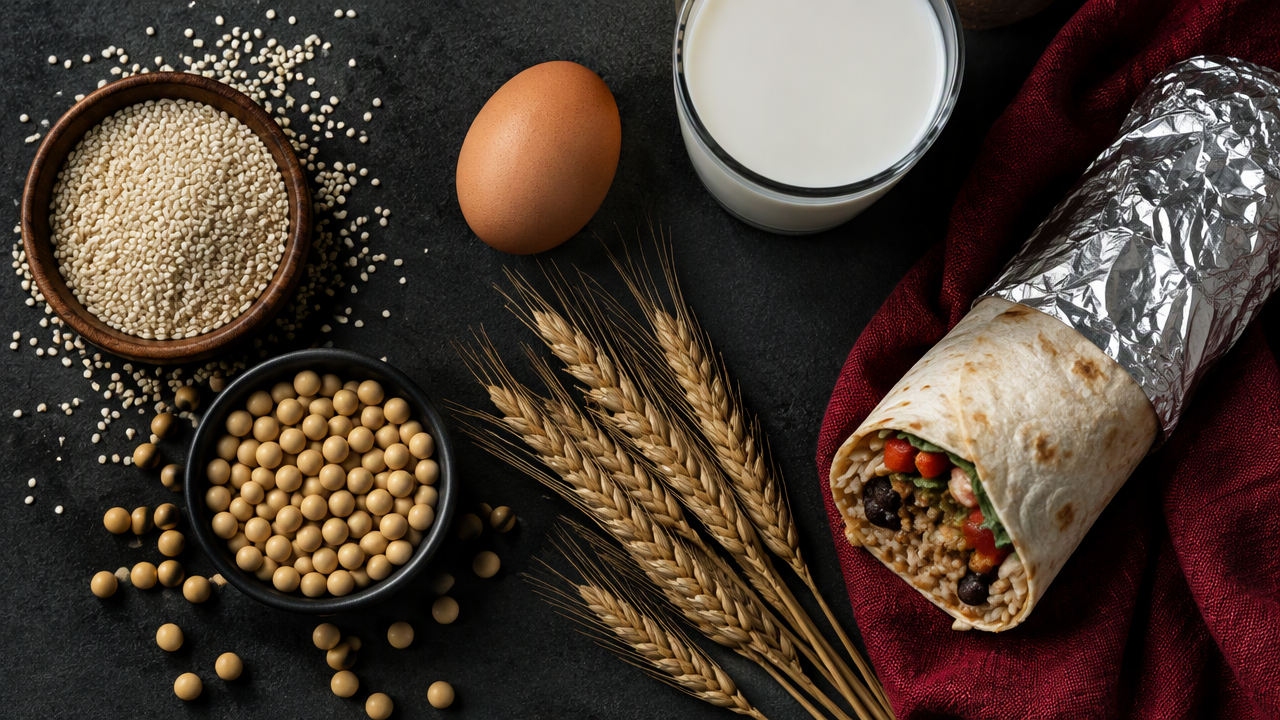
F&S Fresh Foods, Inc. has recalled a refrigerated turkey bacon sandwich distributed in Oregon after sesame was present in the product without being declared on the label. The Vineland, New Jersey, company initiated the voluntary recall on April 2, 2026, and the U.S. Food and Drug Administration classified it as Class II under recall number H-0659-2026, according to the agency's enforcement record. The affected item is the ReadyMeals Turkey Bacon & Cheddar Pretzel Duo Sandwich, a 10-ounce perishable clamshell. Of 325 units distributed, 27 were mislabeled.
What was recalled, and how to identify it
The recall covers the ReadyMeals Turkey Bacon & Cheddar Pretzel Duo Sandwich in a plastic clamshell with a net weight of 10 ounces and the UPC 8 26766 25036 3. The package is marked “Keep Refrigerated,” and the label identifies the distributor as F&S Fresh Foods of Vineland, NJ 08360. According to the FDA record, the product was distributed in Oregon.
Consumers holding a package should check three markings. The Best if Used By date on the affected units is 04/06/26. The lot code is FSNW 089. The record also identifies the manufacturing location as Clackamas, Oregon, and notes a Julian date on the packaging. A sandwich matching those codes should be treated as part of the recall.
The label on the affected product declares: CONTAINS EGG, MILK, SOY, WHEAT. It does not declare sesame.
Why it matters: a label already crowded with allergens
Sesame has been a major food allergen under federal law since the FASTER Act took effect on January 1, 2023. That means it must be declared by name, either in the ingredient list or in a “Contains” statement, the same standard applied here to egg, milk, soy and wheat. The F&S sandwich met that standard for four allergens and missed it for a fifth.
Sesame allergy can produce reactions ranging from hives and stomach upset to anaphylaxis, a sudden and potentially life-threatening reaction that requires epinephrine and emergency care. Reactions are not predictable from one exposure to the next; a person who previously had a mild response is not guaranteed a mild one. Heat does not neutralize an allergen, either. Toasting or microwaving a mislabeled sandwich would not make it safe for someone with sesame allergy.
What makes this recall especially pointed is the kind of household it reaches. A label that already lists egg, milk, soy and wheat describes a product routinely bought by families who read the fine print as a matter of daily practice: parents packing lunches, caregivers shopping for a child with a diagnosed allergy, adults managing their own. Those are the shoppers most likely to be guided by a “Contains” line that omits sesame, because that line is exactly what they have been trained to trust.
Children and adults with asthma, and people who have had a prior severe reaction, are generally considered at higher risk of a serious outcome from food-induced anaphylaxis. For those households, a missing allergen declaration is not a labeling technicality.
How the problem surfaced, and what it says about the system
According to the FDA record, the sandwich “contains visible sesame but label does not declare sesame.” The record does not specify how that discrepancy was detected, whether through a consumer complaint, a company review of its labels or an inspection. What it does show is that 27 of 325 distributed units were mislabeled, meaning the error was confined to a portion of the run rather than the entire production lot.
That detail matters. Partial-lot labeling errors are among the hardest for a shopper to catch, because two identical-looking clamshells on the same shelf can come from different labeling streams. A consumer cannot tell by appearance alone; only the lot code and date separate the affected units. And this particular failure had a visible tell: the seeds themselves were there. Visible sesame should be a last resort in detecting an allergen problem, not the primary line of defense. Packaging checks exist so that what is plainly visible in the sandwich is also plainly stated on the label.
The FDA assigned the recall Class II, a category the agency uses where there is a remote probability of serious health consequences from the product, or where any health consequence is likely to be temporary and medically reversible. Classification is set at the population level. It does not describe the risk to any one allergic person, for whom a single serving of the wrong sandwich could be serious.
Some context worth stating plainly: the record does not mention any illnesses or allergic reactions linked to these sandwiches, and it does not indicate that any consumer was harmed. The recall is listed as closed in the FDA's enforcement database.
What consumers should do now
Anyone who bought the ReadyMeals Turkey Bacon & Cheddar Pretzel Duo Sandwich in Oregon should check the package against the UPC and lot code above before eating it. If it matches and there is anyone with sesame allergy in the household, do not serve it, do not taste it to check, and do not rely on scraping off the seeds. Return it to the store or discard it in a sealed bag. Families with questions about the recall can consult the FDA notice linked below. For general meat and poultry food-safety questions, the USDA Meat and Poultry Hotline is 1-888-674-6854.
- Check the label: Look for UPC 8 26766 25036 3 and the name ReadyMeals Turkey Bacon & Cheddar Pretzel Duo Sandwich.
- Verify the codes: Best if Used By 04/06/26; lot FSNW 089; manufacturing location Clackamas, Oregon.
- Read the Contains line: EGG, MILK, SOY, WHEAT, with no mention of sesame.
- Do not improvise: Heating the sandwich or picking off seeds does not make it safe for a sesame-allergic person.
- Plan for emergencies: Anyone with a prescribed epinephrine auto-injector should carry it, and household members should know how to use it and when to call 911.
- Report reactions: Consumers who suspect an allergic reaction after eating the product should seek medical care and report the event to the FDA.
The watchdog takeaway
Recalls for undeclared allergens are among the most common entries in the FDA's enforcement database, and they share a pattern: the food itself is often wholesome, and the failure sits on the packaging line. For most shoppers that is an inconvenience. For a family managing food allergy, it is the one part of the purchase they cannot verify with their own senses, which is why the printed declaration carries so much weight.
The practical lesson for households is to keep reading the entire allergen statement rather than scanning for a familiar word, and to check lot codes on perishable prepared foods even when the brand is one they buy routinely. A product that was safe last week is not automatically the same product this week. The lesson for the system is simpler still: when 27 packages out of a 325-unit run carry the wrong label, the safeguard that should have caught it is the one that matters most, and it has to work every time, not most of the time.
Consumers can review the full recall details and product list and the official FDA notice.