El Eden Recalls 264 Pounds of Colombian Pork Cracklings Snacks Over Import Violation
El Eden Import Distributor Corp. is recalling about 264 pounds of De Todito snack mixes whose pork cracklings came from Colombia, a country not cleared to export meat to the United States.
By Dustin Reed Terry, Founder & Editor · Published
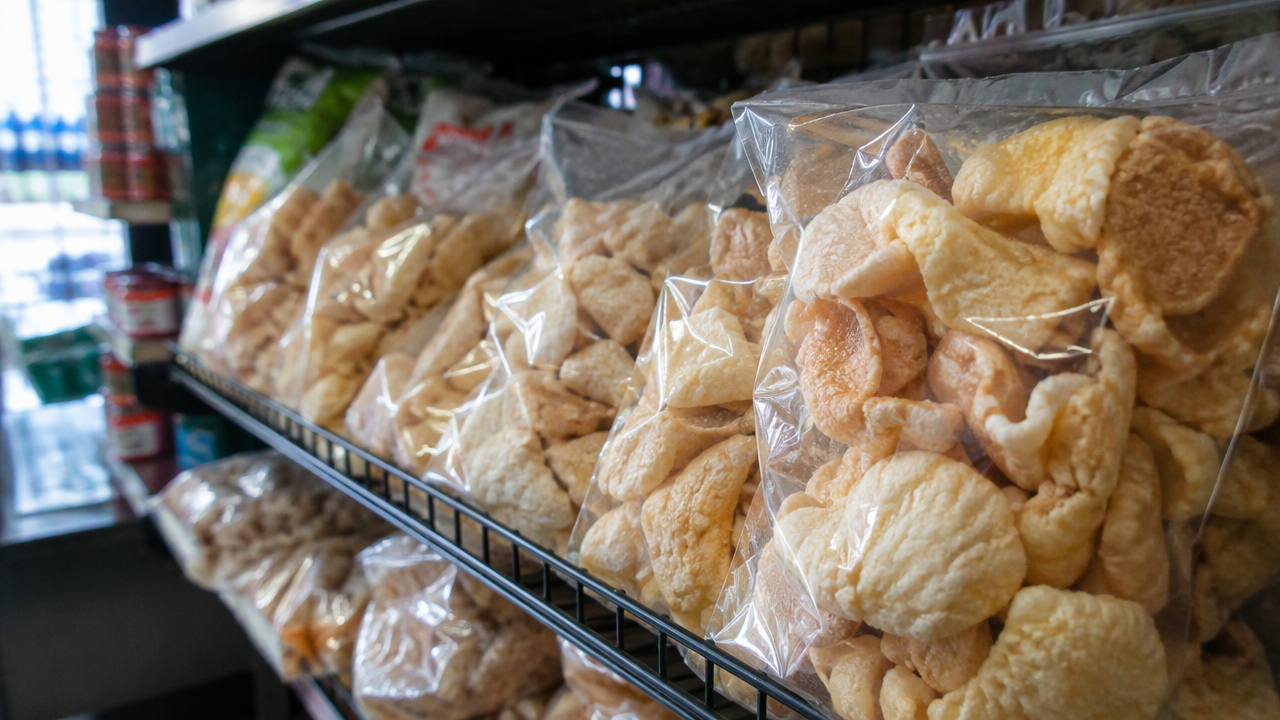
El Eden Import Distributor Corp., a Long Island City, N.Y., firm, is recalling approximately 264 pounds of potato chip products containing chicharrón — pork cracklings — because the meat was produced in the Republic of Colombia, a country that is not eligible to export meat products to the United States, according to the USDA Food Safety and Inspection Service. The recall, numbered 021-2026 and announced September 9, 2026, covers 45-gram foil bags of "De Todito NATURAL" and "De Todito BBQ" mixed chips that include chicharrón under the "CHICHARRÓN AMERICANO JACKS" name alongside "Margarita" and "NatuChips" components. FSIS classified the action as Class I, its most serious category. The products were shipped to a distributor in New Jersey and to retail locations in New Jersey, Utah, Massachusetts, New York, Connecticut and Illinois. No confirmed reports of illness or injury have been linked to these products, the agency said, and the recall is now listed as closed.
What was recalled, and how to identify it
Two product lines are covered, both in 45-gram foil bags: "De Todito NATURAL" mixed chips containing "CHICHARRÓN AMERICANO JACKS," "Margarita" and "NATU CHIPS," and "De Todito BBQ" mixed chips containing the same chicharrón, "Margarita" and "NatuChips" components. The bags are small, shelf-stable snack packs of the kind sold at checkout counters, in convenience stores and in specialty groceries that stock Latin American brands.
The single most useful identifying detail in the official notice is what the labels do not carry. According to FSIS, the products subject to the recall "do not bear any import marks on the labels." For imported meat and poultry, that mark is the consumer's only visible evidence that the meat inside was produced under an inspection system the United States has reviewed and accepted, and that the shipment passed through official import channels. Its absence is not a printing oversight. It is the signature of product that came in outside the legal pathway.
FSIS said the items went to a distributor in New Jersey and to retail locations in New Jersey, Utah, Massachusetts, New York, Connecticut and Illinois, and cautioned that consignees in additional states may still be identified as the investigation continues. When available, the retail distribution list will be posted on the FSIS website. Because the notice does not identify specific stores, consumers in those six states who buy De Todito mixed snacks should check the package rather than assume their local market was unaffected.
Why a pork crackling inside a chip bag is a federal problem
This recall is not the typical pathogen story. FSIS lists the hazard as an import violation, and the official notice does not identify a specific bacterium, contaminant or residue in the product. The problem is structural: the chicharrón was made in Colombia, and Colombia is not on the list of countries eligible to export meat products to the United States.
That eligibility list is not a formality. FSIS permits meat imports only from countries whose inspection systems the agency has determined to be equivalent to the U.S. system — a judgment that involves reviewing a foreign government's laws, inspection procedures and laboratories, and verifying that the meat can be traced and certified before it crosses the border. A meat ingredient produced outside that framework arrives with no verified assurance about how the animals were raised, how the product was handled, what pathogens or drug residues it may carry, or whether animal disease conditions in the source country would have barred it from export. FSIS has no basis on which to conclude the product was made under conditions the United States considers safe.
That is also why the agency can classify a recall like this as Class I even though no one has reported getting sick. Under FSIS definitions, a Class I recall is one in which there is a reasonable probability that use of the product will cause serious, adverse health consequences or death. Classification reflects the potential for harm, not a body count. The absence of confirmed illnesses in this record means exactly that — no confirmed illnesses — and it does not downgrade the hazard.
There is a practical dimension for shoppers as well. On a domestically produced meat or poultry product, the mark of inspection and the USDA establishment number are printed on the package, and consumers can use them to confirm the product came from a federally inspected plant. On an imported product, the import mark performs the same function. A meat-containing snack that carries neither mark cannot be verified at the kitchen table, which is precisely the gap the recall is meant to close.
How the problem was found, and why the map grew
FSIS attributes the discovery to a consumer complaint. The agency received a complaint about "De Todito" snack products containing dried plantains, potato chips and chicharrónes imported from Colombia. From that single report, investigators identified the firm, the products and a distribution footprint that reached a New Jersey distributor and retail shelves in six states.
The record also shows how a public notice changes as an investigation matures. FSIS updated the release on September 17, 2026, adding Massachusetts, New York, Connecticut and Illinois, and removing a specific July 28 import date in order to more accurately characterize the product as ineligible for import. That edit is worth reading closely: rather than pin the violation to one shipment on one day, the agency reframed the problem as a category of product that should not have entered the country at all. The expansion of states and the correction of the violation description both point to the same lesson — early distribution maps are provisional, and a recall notice is a living document.
The complaint-driven origin is equally instructive. A single shopper who recognized something wrong in a bag of mixed snacks set off a federal traceback. FSIS maintains an online Electronic Consumer Complaint Monitoring System that accepts reports 24 hours a day, and this recall is a reminder that the channel produces results. The agency also said it routinely conducts recall effectiveness checks to verify that recalling firms notify their customers and take steps to ensure the product is no longer available to consumers.
What consumers should do now
FSIS said it is concerned that some of this product may be sitting in consumers' pantries, and it is urging people who bought the recalled snacks not to eat them.
- Check your snack stash now. Look for 45-gram foil bags of "De Todito NATURAL" or "De Todito BBQ" mixed chips that list "CHICHARRÓN AMERICANO JACKS" among the contents.
- Look for the missing import mark. The recalled bags carry no import marks on the label, according to FSIS. If your package matches that description, treat it as recalled product.
- Do not eat it, and do not hand it to children. The agency's instruction is specific: throw the product away or return it to the place of purchase.
- Check bags bought in the six named states — New Jersey, Utah, Massachusetts, New York, Connecticut and Illinois — and watch for additional states as the investigation continues.
- Report illness or a problem. Anyone concerned about illness or injury should contact a healthcare provider. Problems with a meat, poultry or egg product can be reported through FSIS's Electronic Consumer Complaint Monitoring System at foodcomplaint.fsis.usda.gov.
- Ask questions of the firm or the agency. Consumers with recall questions can contact Humberto Gallego, owner of El Eden Import Distributor Corp., at [email protected]. Food-safety questions can go to the USDA Meat and Poultry Hotline at 1-888-674-6854 or [email protected].
The watchdog takeaway
Import violations occupy a quiet corner of the recall system. They rarely involve a pathogen confirmation, a hospitalization count or a dramatic photograph, and they tend to involve small lots — 264 pounds is a fraction of what a single ground beef recall can cover. But the volume is not the point. Every ineligible pound represents meat that entered the country without the inspection guarantee that Congress, and consumers, assume comes with a USDA-regulated product.
The structural blind spot here is mixed snacks. When meat is an ingredient tucked inside a bag of plantain and potato chips rather than the centerpiece of the package, it is easier for a buyer to overlook, easier for a small importer to misjudge, and harder for a shopper to recognize as a regulated meat product. The remedy at the consumer level is the label: on any meat-containing product, look for the mark of inspection or the import mark, and treat its absence as a stop sign. The remedy at the system level is the complaint line, which is exactly how this one surfaced.
A recall being marked closed means the firm has completed the steps FSIS requires. It does not mean the product is safe to eat, and it does not mean the last bag has been found. For the complete list of affected items, lot information and distribution details, see our full recall details and product list and the official USDA FSIS notice. If you are clearing out a pantry or freezer after any recall, our guide to handling recalled meat walks through what to discard, what to return and how to clean up afterward.