Corte Argentino Recalls 29,628 Pounds of Argentine Beef That Skipped U.S. Reinspection
A Class I USDA recall covers five boneless cuts sold to distributors and retailers in Florida and Texas, with freeze-by dates through September 20, 2026.
By Dustin Reed Terry, Founder & Editor · Published
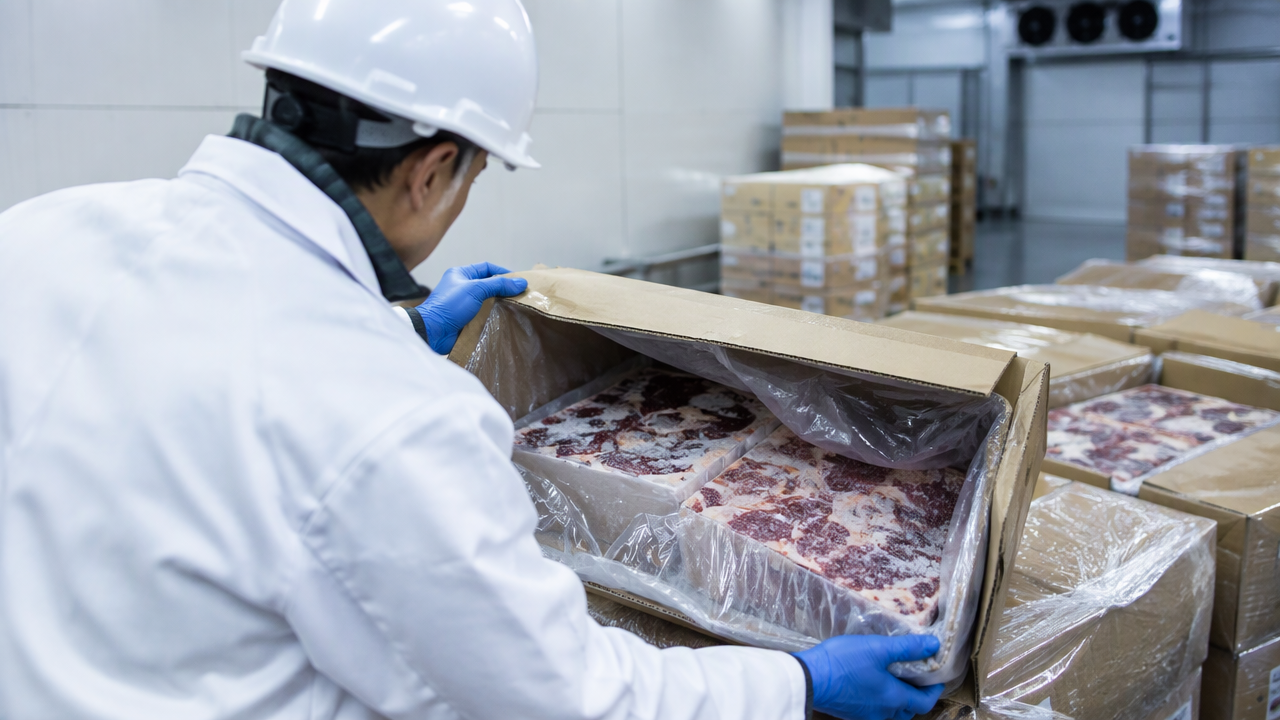
Corte Argentino USA LLC, a distributor based in Aventura, Florida, is recalling approximately 29,628 pounds of raw boneless beef imported from Argentina that entered the United States without the benefit of import reinspection, according to a Class I recall notice the U.S. Department of Agriculture’s Food Safety and Inspection Service published on August 7, 2026. The beef — five boneless cuts packed in various-weight cardboard boxes under the Frigorifico Gorina SAIC label — was distributed to distributors and retailers in Florida and Texas, and FSIS says some of it may still be in consumers’ refrigerators and freezers.
The products were produced between May 15 and May 20, 2026, and carry use-or-freeze-by dates between September 15 and September 20, 2026, according to the notice. That timeline matters at home: this is a recall window in which the beef could still be waiting in a freezer rather than already eaten.
What was recalled, and how to identify it
The notice lists five boneless beef cuts, each in various-weight cardboard boxes bearing the Frigorifico Gorina SAIC name:
- Top Sirloin Butt (“Cuadril Sin Tapa”)
- Eye Round (“Peceto”)
- Topside Cap Off (“Nalga AD S/Tapa”)
- Flat (“Carnaza Cuadrada”)
- Knuckle (“Bola de Lomo”)
Two markings do the identifying work. The boxes bear the Argentine establishment number “EST. N° OF. 2025” and the shipping mark “26644-AA,” both spelled out in the FSIS notice. Neither is a U.S. establishment number, and that difference is the practical heart of this recall: domestically inspected beef carries a USDA mark of inspection tied to a U.S. establishment, while these boxes carry a foreign plant designation and arrived without the port-of-entry verification step that normally accompanies imported meat.
Because FSIS describes distribution to distributors as well as retailers, some of this beef may have been broken out of its original box and sold from a service case or repackaged by a store. If the carton is not in front of you, ask the counter where the beef originated and whether any Frigorifico Gorina SAIC product is in the case.
Why an import violation is treated as a Class I hazard
FSIS lists the hazard here as an import violation, not a specific pathogen. The recall is Class I, the agency’s most serious category, reserved for situations in which there is a reasonable probability that use of the product will cause serious, adverse health consequences or death. In practical terms, the agency is treating a missing verification step as a serious gap rather than a paperwork lapse.
Import reinspection is the checkpoint at which FSIS verifies that meat produced in a foreign establishment meets U.S. requirements before it moves into domestic commerce. When that step is skipped, the verification has not been performed for the lot in question. The notice does not name a pathogen and does not describe a contamination event, and it states that there have been no confirmed reports of illness or injury due to consumption of these products. Anyone concerned about an illness or injury should contact a healthcare provider.
How the problem was found, and what it says about the system
The notice says the problem was discovered during routine FSIS inspection activities — not through a consumer complaint and not through an illness cluster. That is the reassuring half of the story: ordinary inspection work surfaced a missing reinspection step, and the agency moved to a recall.
The less reassuring half is the sequence. The recall covers 29,628 pounds that had already been distributed to two states, and FSIS explicitly says it is concerned that product may be in consumers’ refrigerators and freezers — meaning the gap was identified after the beef had moved through the supply chain. FSIS says it routinely conducts recall effectiveness checks to verify that the recalling firm notified its customers and that steps were taken to make certain the product is no longer available to consumers. When available, retail distribution lists will be posted on the agency’s recalls page.
What households should do now
FSIS urges consumers who purchased these products not to consume them. The beef should be thrown away or returned to the place of purchase. Given the use-or-freeze-by dates of September 15 through September 20, 2026, the most useful step for most households is a deliberate check of the freezer and the back of the refrigerator, not a quick glance at the front of a shelf.
If you find a matching box, do not cook and taste it to judge whether it is fine. The concern is a verification step that was never completed, and nothing about the look or smell of raw beef resolves that. Set the package aside, double-bag it for the trash or take it back to the store, and wash your hands and any surfaces it touched. Safe cooking temperatures remain good practice in any kitchen — whole cuts of beef to 145 F with a three-minute rest, ground beef to 160 F — but they are not a substitute for the recall instruction.
- Check the freezer and refrigerator for various-weight cardboard boxes labeled Frigorifico Gorina SAIC.
- Look for the Argentine establishment number “EST. N° OF. 2025” and shipping mark “26644-AA.”
- Match the cut names: Top Sirloin Butt (Cuadril Sin Tapa), Eye Round (Peceto), Topside Cap Off (Nalga AD S/Tapa), Flat (Carnaza Cuadrada), Knuckle (Bola de Lomo).
- Check for use-or-freeze-by dates between September 15 and September 20, 2026.
- Do not eat the product; throw it away or return it to the store.
- Ask at a service counter if you bought beef that may have been repackaged out of its original box.
- Recall questions: Eial Kaplun, general manager, Corte Argentino USA LLC, 786-350-5805 or [email protected].
- Food-safety questions: USDA Meat and Poultry Hotline, 888-674-6854 (888-MPHotline) or [email protected]. Problems with a meat, poultry or egg product can be reported 24 hours a day through FSIS’s Electronic Consumer Complaint Monitoring System at foodcomplaint.fsis.usda.gov/eCCF/.
The broader watchdog takeaway
Imported meat moves under a system built on country equivalence and plant certification, and border reinspection is where those assurances become something the agency has actually checked. When a step is skipped, the carton in a consumer’s freezer is the last remaining link to the plant that produced the beef — and a store receipt is often the only record that a particular purchase is covered.
FSIS lists recall 013-2026 as closed, a status that describes the agency’s file on the firm’s recall actions, not the contents of any individual kitchen. The practical lesson is unglamorous: keep receipts for meat purchases, ask where beef at a service counter came from, and treat the words imported and inspected as two different claims rather than one. For households in Florida and Texas, the check is worth making today, while the freeze-by window is still open.
MeatRecalls.com maintains the full recall details and product list, and consumers can read the official USDA FSIS notice for the agency’s own description of the recall and its instructions.