City Foods Recalls 3,215 Pounds of Pastrami and Corned Beef Over Listeria
A routine inspection, not an illness report, caught Listeria risk in 3,215 pounds of ready-to-eat deli beef that had already reached foodservice customers in three states and, through them, the national market.
By Dustin Reed Terry, Founder & Editor · Published
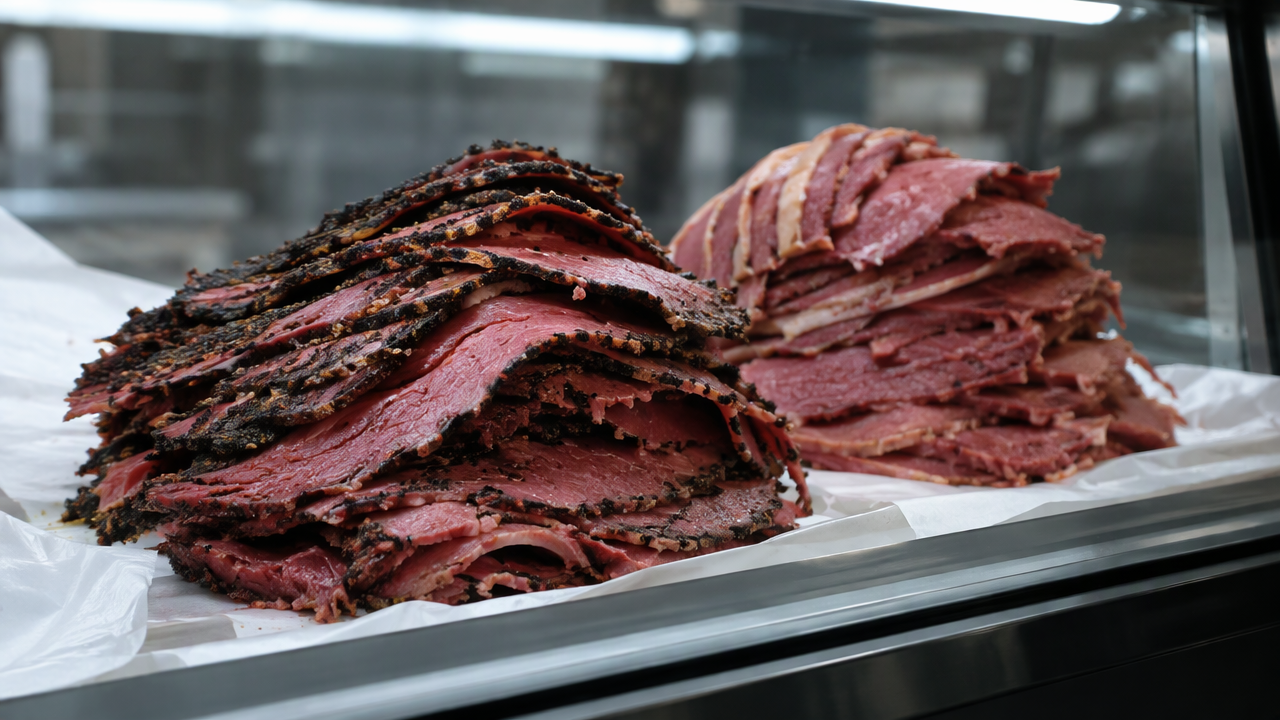
City Foods, Inc., a Chicago establishment, is recalling approximately 3,215 pounds of ready-to-eat pastrami and corned beef that may be adulterated with Listeria monocytogenes, according to a Class I recall notice from the USDA Food Safety and Inspection Service. The recall, number 015-2026, was announced Aug. 8, 2026, and revised by the agency on Aug. 13. The product was made on July 16, 2026, and carries a 60-day shelf life — long enough that some of it may still be sealed in refrigerators and freezers at restaurants, institutions and, potentially, homes. According to FSIS, there have been no confirmed reports of illness linked to these products. The agency says the problem was discovered during routine inspection activities.
What was recalled, and how to identify it
Three ready-to-eat beef items fall under the recall, all bearing establishment number "EST. 1896" inside the USDA mark of inspection. According to the corrected notice, they are:
- 10-lb. cardboard boxes containing four 2.5-lb. pieces of "MIDAMAR HALAL SLICED PASTRAMI ROUND 4/2.5# - MIDAMAR," with "ITEM #: MBPS10" printed on the label.
- Various-weight 20- to 30-lb. cardboard boxes containing 2 to 3 pieces of "BEA'S BEST COOKED CORNED BEEF BRISKET," with case code "18919" printed on the box label.
- Various-weight 20- to 30-lb. cardboard boxes containing 2 to 3 pieces of "KIRSCH DELICATESSEN STYLE COOKED CORNED BEEF BRISKET," with case code "19751" printed on the box label.
FSIS says the items were shipped to foodservice locations in Illinois, Iowa and Michigan, "from which they were further distributed nationwide." That distribution path matters more than it might appear at first read. These are not retail packages with a consumer-facing nutrition panel and a brand a shopper would recognize on a deli shelf. They are institutional boxes identified by case codes — the kind of packaging that gets opened in a restaurant kitchen or a commissary and never reaches a household intact. The establishment number inside the USDA mark of inspection is the one identifier that travels all the way through the chain, and it is the fastest way for an operator to check what is in the walk-in.
Why Listeria in ready-to-eat beef is a serious classification
FSIS classified this recall as Class I, its most serious category, reserved for situations in which there is a reasonable probability that use of the product will cause serious, adverse health consequences or death. The hazard here is Listeria monocytogenes, and the reason it earns that classification in a ready-to-eat product is that ready-to-eat means exactly what it says: the consumer is not expected to cook it.
According to FSIS, consumption of food contaminated with Lm can cause listeriosis, a serious infection that primarily affects older adults, people with weakened immune systems, and pregnant women and their newborns. Less commonly, people outside those groups are affected. Symptoms can include fever, muscle aches, headache, stiff neck, confusion, loss of balance and convulsions, sometimes preceded by diarrhea or other gastrointestinal symptoms. In pregnant women, the agency says, infection can cause miscarriage, stillbirth, premature delivery or life-threatening infection of the newborn. Serious and sometimes fatal infections occur in older adults and people with weakened immune systems. Listeriosis is treated with antibiotics, and FSIS advises people in higher-risk groups who develop flu-like symptoms within two months of eating contaminated food to seek medical care and tell the provider what they ate.
That two-month window is not incidental to this recall. It is one of the reasons the agency treats a positive finding in a ready-to-eat product as urgent even before anyone reports being sick.
How the problem was found, and what it says about the system
The record contains four words that carry most of the weight of this story: "during routine inspection activities." This recall was not triggered by a cluster of illnesses, a hospital's report to public health authorities, or a consumer complaint. It surfaced because a federal inspector was doing scheduled work at a Chicago establishment. That is the system functioning as designed — catching a hazard before the evidence of harm accumulates.
It is also a reminder of where the load-bearing walls are. Outbreak-driven recalls dominate headlines because illness is vivid and countable. But the far larger share of the safety net is unglamorous, repetitive verification: inspection, sampling, record review, follow-up. When that work is resourced and performed, product comes off the market quietly. When it is not, the alternative detection mechanism is sick people.
At the same time, the timeline exposes the limits of even a well-timed catch. The product was made July 16 and the recall was announced Aug. 8 — more than three weeks in which 3,215 pounds moved from a Chicago establishment into three states and then, through further distribution, across the country. Because the product carries a 60-day shelf life, the outer edge of that window falls around mid-September, which is why FSIS warns that some of it may still be in refrigerators and freezers, including institutional units.
Then there is the channel problem. The agency says it "routinely conducts recall effectiveness checks to verify recalling firms notify their customers of the recall and that steps are taken to make certain that the product is no longer available to consumers," and that a retail distribution list will be posted "when available." The notice in the record does not include the results of those checks, and the recall is listed as closed. Consumers reading a foodservice-focused recall have no practical way to know which sandwich counters, caterers or cafeterias received the product. That gap — between a recall that is administratively complete and a consumer who still cannot answer "was this in my lunch?" — is where this story sits.
The label correction is its own cautionary tale
Five days after the initial announcement, FSIS revised the notice to reflect "the correct Midamar product label, the accurate number of pieces contained in each box, and item number reflected on the label." The first version described 10-lb. boxes of "Midamar Premium Beef Pastrami" with case code "19410" and 2- to 5-lb. pieces. The corrected version identifies the product as "MIDAMAR HALAL SLICED PASTRAMI ROUND 4/2.5# - MIDAMAR" with ITEM # MBPS10, containing four 2.5-lb. pieces.
Recall notices are working documents written under deadline, and corrections happen. But in a channel where the identifier on a box is the only thing a warehouse worker or kitchen manager has to match against a recall list, a wrong case code is not a clerical detail. A distributor searching inventory for "19410" would not find the product labeled "MBPS10." The corrected notice is the operative one, and anyone who pulled the original should replace it.
What consumers and food businesses should do now
FSIS urges consumers and institutions not to consume the recalled products. They should be thrown away or returned to the place of purchase. Anyone concerned about illness should contact a healthcare provider. General federal guidance for people at higher risk who choose to eat deli meats is to reheat them until steaming hot — but that guidance applies to product that is not under recall. Recalled food should be discarded, not cooked.
Questions about this recall can go to Brian Sanchez, office manager at City Foods, Inc., at 773-523-1566 or [email protected]. General food-safety questions can go to the USDA Meat and Poultry Hotline at 1-888-674-6854 or [email protected]. Problems with a meat, poultry or egg product can be reported 24 hours a day through FSIS's Electronic Consumer Complaint Monitoring System.
- Check the establishment number. Look for "EST. 1896" inside the USDA mark of inspection on boxes in your cooler or freezer.
- Match the exact code. MBPS10, 18919 or 19751 — and confirm the product name, not just the number.
- Do not taste to test. Listeria does not change taste, smell or appearance.
- Discard or return. Do not donate recalled product, and do not reheat it as a remedy.
- Clean and sanitize any surface, slicer or container that held the product.
- Higher-risk consumers: if flu-like symptoms appear within two months of eating suspect deli beef, seek care and mention the food.
- Foodservice operators: check purchase records back to mid-July, not just current inventory.
The watchdog takeaway
The best outcome in food safety is a recall nobody notices because nobody got sick. By that measure, this one looks like a success: a Class I hazard found on inspection, product pulled, no confirmed illnesses in the record. But the story also shows the soft spots that repeat across recalls — a three-week lag between production and public notice, a foodservice distribution chain that hides the product from the people most able to check for it, and a notice that needed correcting on a code that serves as the only match point in a warehouse. Detection is the first duty of the system. Closing the distance between detection and a consumer who can act on it is the second, and it is the one that still needs work.
For the full list of affected products, case codes and label images, see the full recall details and product list. The agency's revised notice is available in the official USDA FSIS notice.