Brett Anthony Foods Recalls 1,935 Pounds of Wow Bao Buns Over Undeclared Allergens
A Class I recall covers frozen cheeseburger bao buns that may actually hold Chinese-style BBQ pork with sesame and soy, allergens the label never declared.
By Dustin Reed Terry, Founder & Editor · Published
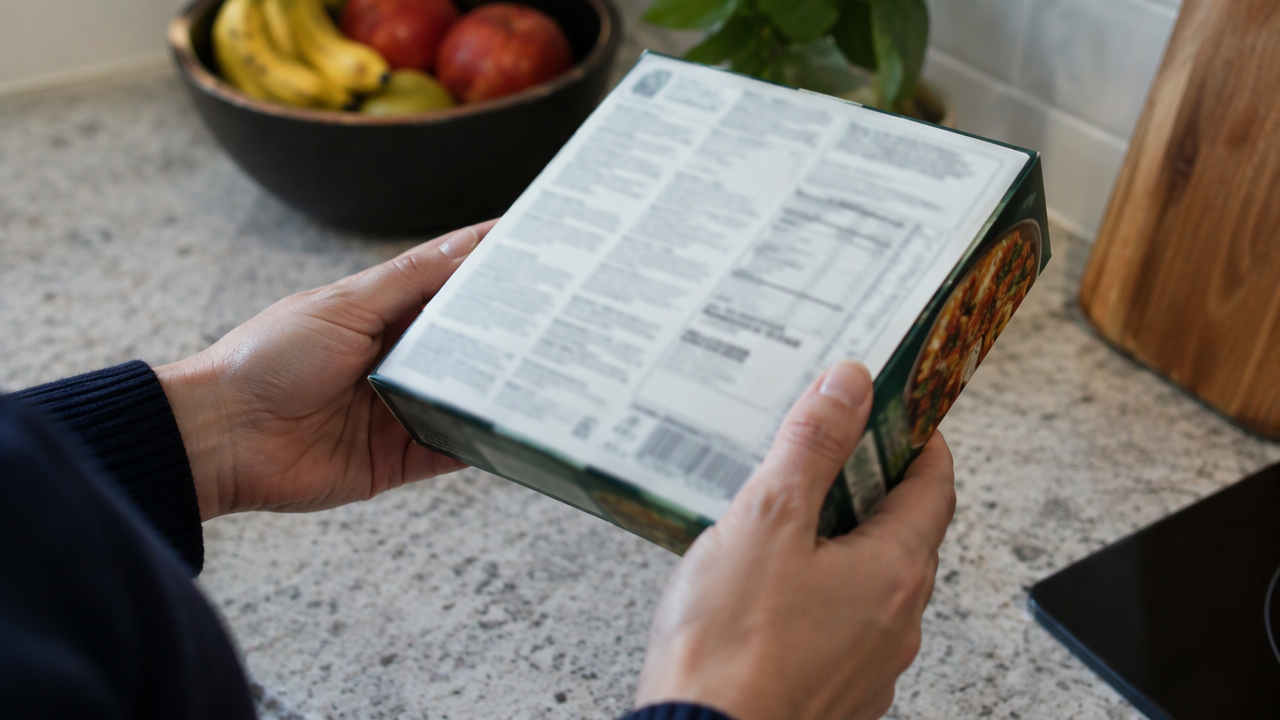
Federal food-safety officials have placed a recall of frozen cheeseburger bao buns sold under the Wow Bao name into Class I, the agency's most serious category, after the packages were found to potentially contain a different product altogether, one carrying two allergens the label never disclosed. Brett Anthony Foods, an Elk Grove Village, Illinois, establishment operating under USDA establishment number 40001, is recalling approximately 1,935 pounds of the product, according to the USDA Food Safety and Inspection Service. FSIS announced the recall on November 22, 2026, as recall 028-2026. The product was shipped to distributors in Alabama, Colorado, Connecticut, Georgia, Iowa, Maine, Massachusetts and Michigan for further distribution to retail stores. FSIS said there have been no confirmed reports of adverse reactions linked to the product.
What was recalled and how to identify it
The recall covers 10-ounce cardboard boxes containing four buns, labeled "WOW BAO CHEESEBURGER BAO BUNS PACKED WITH ALL-NATURAL BEEF." The identifying code appears on the side of the box: "USE BY 10. 01. 27 LOT #26243 EST 40001." The establishment number 40001 is printed in the same area, which matters because the mark of inspection is the most reliable way for a consumer to match a package in the freezer to a federal recall notice.
According to FSIS, the product labeled as a cheeseburger bao bun may actually contain a Chinese-style BBQ pork product. That filling contains sesame and soy, both known allergens, and neither is declared on the label of the cheeseburger bun package. The affected product was produced on September 10, 2026.
The agency said the recall involves misbranding as well as undeclared allergens, a pairing that reflects the nature of the failure: the box describes one food and the contents may be another. FSIS noted in an editor's note accompanying the release that the notice had been updated to reflect that the subject of the release is a frozen fully cooked cheeseburger product, not a Chinese-style BBQ pork product. Consumers should read the identification details carefully rather than relying on a general description of the item.
The hazard: why a swapped filling is a Class I problem
Class I is the classification FSIS applies when there is a reasonable probability that use of the product will cause serious adverse health consequences or death. That standard is not reserved for bacterial contamination. For the roughly 1 in 10 Americans living with food allergies, an undeclared allergen is a genuine hazard, and reactions can escalate within minutes.
Soy is one of the major food allergens long recognized under federal labeling law, and sesame joined that list as the ninth major allergen, with labeling requirements taking effect January 1, 2023. For people managing those allergies, the package is the only warning system available. A label that omits sesame or soy does not merely inconvenience a shopper; it removes the information that person needs to make a decision that could prevent an emergency.
There is a second dimension to a swap of this kind. A box that advertises all-natural beef while possibly holding pork also matters to consumers who avoid pork for religious or dietary reasons. FSIS classifies such cases as misbranding, and the agency's concern extends to anyone who purchased the product expecting the contents described on the front of the box.
FSIS said it is concerned that some of the product may be sitting in consumers' freezers. Frozen, fully cooked items tend to be bought and stored rather than eaten right away, which widens the window in which an unopened box can remain in a home kitchen long after the recall announcement.
How the problem was found and what it says about the system
The problem was discovered when the establishment received a consumer complaint and notified FSIS, according to the agency. That sequence is worth pausing on. No routine sampling result or label review flagged this lot first; a member of the public noticed something wrong with a box of buns and reported it, and the company then contacted the government.
That is the system working, but it is also the system working late. A mislabeled lot produced on September 10, 2026, reached distributors across eight states before it was caught. Consumer complaints are one of the most important signals in food safety precisely because they can surface problems that inspections and sampling do not, but they depend on shoppers recognizing an anomaly and taking the time to report it. FSIS maintains an online Electronic Consumer Complaint Monitoring System that accepts reports around the clock.
The agency said it routinely conducts recall effectiveness checks to verify that the recalling firm has notified its customers and that steps are being taken to make sure the product is no longer available to consumers. When available, retail distribution lists will be posted on the FSIS website. Those lists are often the fastest way for a shopper to confirm whether a store near them received the product.
What consumers should do now
FSIS is urging consumers who purchased the product not to eat it. The buns should be thrown away or returned to the place of purchase. Because the item is frozen, a package could easily be pushed to the back of a freezer and forgotten, so the check should extend to household members, roommates and anyone who may have bought the buns on a shared shopping trip.
Anyone concerned about a reaction after eating the product should contact a healthcare provider. FSIS stated that it has received no confirmed reports of adverse reactions associated with this recall, a point that should not be read as reassurance that the risk is theoretical, only as a statement about what the agency has confirmed to date.
- Check the box: look for the 10-ounce package of four "WOW BAO CHEESEBURGER BAO BUNS PACKED WITH ALL-NATURAL BEEF" and the code "USE BY 10. 01. 27 LOT #26243 EST 40001" on the side.
- Confirm the establishment number: "EST 40001" should appear beside the lot code.
- Do not eat it: discard the product or return it to the retailer for a refund.
- Tell the household: alert anyone who shares the freezer or who may have purchased the buns.
- Watch for symptoms: if someone with a sesame or soy allergy ate the product, seek medical advice; contact a healthcare provider with any concern about a reaction.
- Report problems: use the FSIS Electronic Consumer Complaint Monitoring System at foodcomplaint.fsis.usda.gov/eCCF/.
- Ask questions: the USDA Meat and Poultry Hotline is 1-888-674-6854, or email [email protected].
Consumers with questions about this recall can contact Harry Litberg, Brett Anthony Foods general manager, at 847-361-8090 or [email protected], or Jacob Howard-Robinson, Wow Bao quality manager, at 828-260-6204 or [email protected].
The watchdog takeaway
This recall is a useful reminder of what a label is actually for. It is not marketing copy wrapped around a product; it is the last line of defense for people whose bodies cannot tolerate a specific protein. When a filling is swapped and the front of the box is not updated, the label stops functioning as a safety document and starts functioning as a source of false confidence.
The scale here is modest, 1,935 pounds across eight states, and the hazard is one that most shoppers will never notice. That is exactly why allergen recalls deserve attention out of proportion to their size. The people at risk are not a random sample of the population; they are the households that read every panel before dropping a box into the cart, and for them an omission is the whole story.
For the rest of us, the practical lesson is narrower but durable. Check the freezer against the identifying code, not against a general description. Report the odd box, the wrong texture, the filling that does not match the picture, because that is how this one surfaced. And when a company corrects a public notice, as happened here, read the corrected version rather than the version that circulated first.
Consumers can find the full recall details and product list, review the official USDA FSIS notice, and consult our guide to handling recalled meat before deciding what to do with an affected package.