Ajinomoto Glass Recall Grows to 36.9 Million Pounds of Fried Rice
A Class I recall that began with 3.4 million pounds of frozen Trader Joe's chicken fried rice over glass expanded elevenfold within two weeks to nearly 37 million pounds.
By Dustin Reed Terry, Founder & Editor · Published
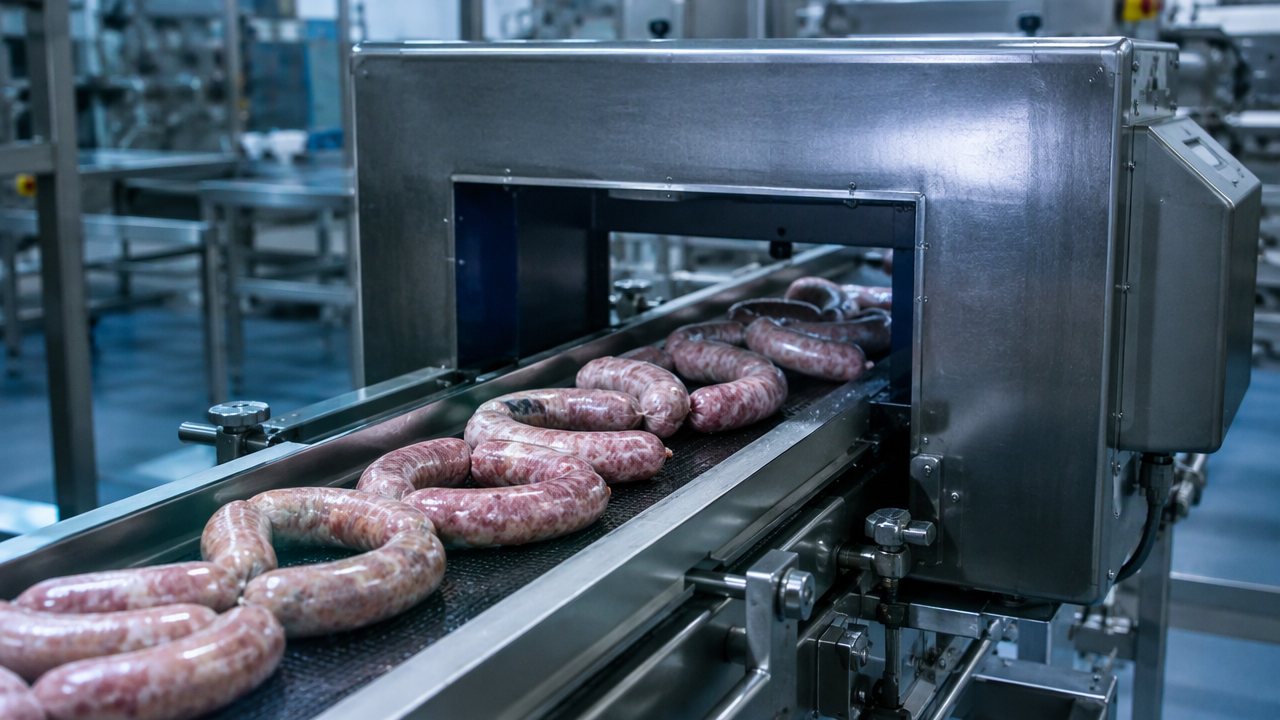
Ajinomoto Foods North America, Inc., a Portland, Ore., establishment, is recalling approximately 3,370,530 pounds of frozen, not-ready-to-eat chicken fried rice products that may be contaminated with glass, according to a Class I notice the USDA Food Safety and Inspection Service published on Feb. 19, 2026. Recall 005-2026 covers 20-oz. bags of Trader Joe's Chicken Fried Rice shipped to the chain's retail locations nationwide, along with a 1.53-kg. Ajinomoto Yakitori Chicken with Japanese-Style Fried Rice package that FSIS says was exported only to Canada. Within two weeks the case had grown elevenfold: on Mar. 3, 2026, the establishment expanded the recall by about 33,617,045 additional pounds of chicken and pork fried rice, ramen and shu mai dumpling products, for a combined 36,987,575 pounds. FSIS reports no confirmed injuries.
What was recalled, and how to tell whether it is in your freezer
The original notice named two frozen products, both formulated with chicken:
- Trader Joe's Chicken Fried Rice — 20-oz. (1 lb. 4 oz.) plastic bag packages described on the label as stir fried rice, vegetables, seasoned dark chicken meat and eggs, with BEST BY dates from 9/8/2026 through 11/17/2026.
- Ajinomoto Yakitori Chicken with Japanese-Style Fried Rice — 1.53-kg. cardboard packages holding six bags, with BEST BEFORE / MEILLEUR AVANT dates of 26 SE 09 through 26 NO 12.
Both bear establishment number P-18356 inside the USDA mark of inspection. According to FSIS, the Trader Joe's item was shipped to Trader Joe's retail locations nationwide; the Ajinomoto item was exported only to Canada, so American shoppers will not encounter it on domestic shelves.
One detail matters more than the printed dates. On Mar. 9, 2026, FSIS updated the product list in the expanded recall to state that products bearing the listed lot numbers are subject to the recall regardless of best-by date. Consumers who have been matching dates against the notice should look to the lot code instead, because the agency has now made it the controlling identifier.
The covered product was manufactured between Sept. 8 and Nov. 17, 2025 — a production window of roughly ten weeks, which is part of why this recall is measured in millions of pounds rather than thousands.
Why glass in a frozen entrée is a Class I problem
FSIS reserves Class I for recalls in which there is a reasonable probability that the product will cause serious, adverse health consequences or death. Foreign material earns that tier for an unglamorous reason: no kitchen technique removes it. Glass is not destroyed by heat and is not washed off by rinsing. A fragment swallowed with food can cut the mouth, throat or digestive tract, and injuries of that kind are not always immediately apparent.
There is a second layer of risk specific to this case. FSIS identifies the chicken fried rice as not ready-to-eat, meaning the packages are labeled to be fully cooked by the consumer. Cooking addresses microbial hazards — poultry should reach 165 F as measured with a food thermometer — but it does nothing whatsoever about glass. A shopper who assumes a skillet will resolve whatever is wrong with a frozen entrée would be wrong here. The agency's instruction is not to cook the product more thoroughly; it is not to consume it at all.
FSIS also notes that anyone concerned about an injury should contact a healthcare provider. That guidance exists because symptoms may lag: abdominal pain, difficulty swallowing or a sensation that something is lodged can appear after eating.
How the problem surfaced, and how the case grew
According to FSIS, the problem was discovered after the establishment notified the agency that it had received four consumer complaints regarding glass found in product. That is a notable chain of events. The hazard was not identified by a federal inspector on a line or by a company laboratory sample; it entered the official record because shoppers found something in their food and said so.
On Mar. 3, 2026, Ajinomoto expanded the recall to cover approximately 33,617,045 additional pounds of various ready-to-eat and not-ready-to-eat chicken and pork fried rice, ramen and shu mai dumpling products, bringing the combined total to 36,987,575 pounds. Six days later, FSIS revised the expanded product list so that lot numbers, rather than best-by dates, define what is covered. The official record does not state what the company found that prompted the expansion; what it documents is the sequence and the scale.
The agency says it routinely conducts recall effectiveness checks to verify that recalling firms notify their customers and that steps are taken to make certain the product is no longer available to consumers. FSIS lists Recall 005-2026 as closed, which is an administrative status reflecting the recall action rather than an assurance that every package has been located.
The hazard trend behind this recall
Foreign material is one of the recurring hazard categories MeatRecalls.com tracks in federal recall records, and it behaves differently from the pathogens that dominate food-safety headlines. Salmonella and Listeria recalls are usually triggered by sampling — a positive test result with a known laboratory trail. Foreign material recalls are more often triggered by complaints, which means the detection point is a consumer's kitchen rather than a plant's quality-control desk.
That distinction shapes how quickly a recall takes its final form. Establishments generally rely on metal detection, and in some plants X-ray systems, to screen product, but those systems are designed around specific material types and are not a blanket guarantee. When glass is suspected, investigators have to work backward through suppliers, packaging and processing steps to establish the likely scope, which is why initial notices can later be revised. Consumers should therefore treat a first product list as a starting point rather than a finished document, and check back on a recall page after an expansion.
The scale here also illustrates a structural reality of ready-to-eat and frozen manufacturing: a single production line supplies many outlets and many labels at once. When something goes wrong across a ten-week production window, the recall footprint follows the distribution map, not the number of complaints.
What consumers should do now
FSIS urges consumers who have purchased the recalled products not to consume them. The products should be thrown away or returned to the place of purchase. Because these are freezer items bought weeks or months ago, the practical step is to check the freezer against the lot numbers in the expanded product list, not merely against the dates printed on the bag.
Consumers with questions about the recall can contact Consumer Affairs at Ajinomoto Foods North America at (855) 742-5011 or by email at [email protected]. Food-safety questions can go to the toll-free USDA Meat and Poultry Hotline at 1-888-674-6854 or by email to [email protected]. To report a problem with a meat, poultry or egg product, FSIS operates the Electronic Consumer Complaint Monitoring System, available 24 hours a day at https://foodcomplaint.fsis.usda.gov/eCCF/.
- Check freezer bags for establishment number P-18356 inside the USDA mark of inspection.
- Check lot codes against the expanded product list, not only the best-by dates.
- Do not cook the product to salvage it; heat does not eliminate glass.
- Discard the product or return it to the store for a refund.
- Report any suspected injury or foreign material to a healthcare provider and to FSIS through the consumer complaint system.
- Recheck the recall page after any expansion, since lists and lot guidance have already changed once.
A watchdog takeaway
The most consequential fact in this record is not the tonnage. It is that four consumer complaints preceded an elevenfold expansion. That pattern argues for shoppers treating the federal complaint system as a genuine safety tool rather than paperwork — reporting a foreign object is how a hazard becomes visible to regulators, and it is how the scope of this recall was ultimately defined.
It also argues for patience with recall notices. A first list published on the day of announcement is frequently not the last word; here the product list was revised twice, once for scope and once for how coverage is determined. Families who checked their freezers in February and moved on should check again, because the March expansion reached products and lot numbers the original notice never mentioned.
For the complete product list, lot codes and label images, see the full recall details and product list. The agency's own announcement, including the March expansion and the revised lot guidance, is available in the official USDA FSIS notice.